
Filago congesta
Filago congesta
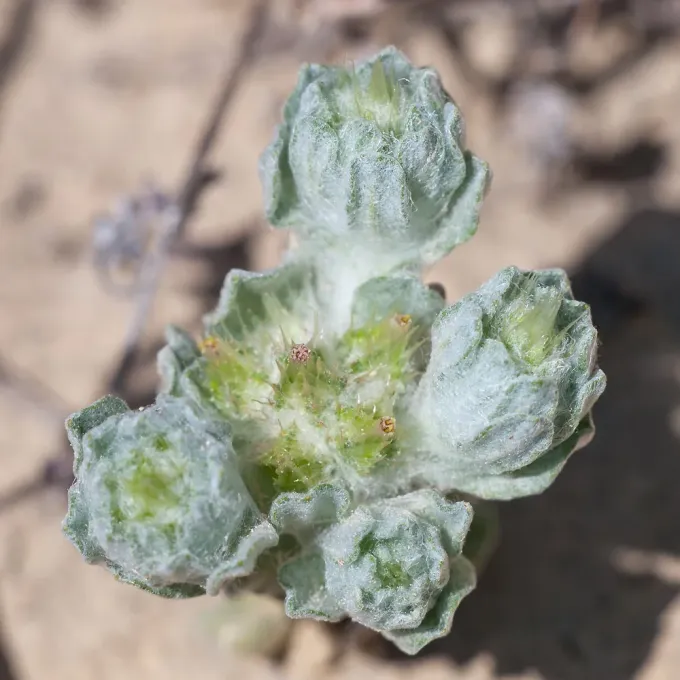
Description
Growing requirements
Filago congesta is an annual herbaceous plant belonging to the Asteraceae family. It is recognized for its adaptation to arid and semi-arid environments where water availability is often limited.
The plant demonstrates a strong preference for well-drained, sandy, or gravelly soils. It requires full sunlight exposure to maintain its characteristic morphology and compact growth habit.
Adaptation to high-temperature conditions is a hallmark of this species. Its dense woolly indumentum serves as a protective layer, reducing transpiration and shielding the tissue from direct ultraviolet damage.
Climate requirements include low to moderate precipitation during the active growth phase. The species is highly sensitive to waterlogging, which can cause rapid physiological collapse.
Regarding soil fertility, it thrives in nutrient-poor substrates and can compete successfully in ecosystems where other vegetation struggles due to poor moisture retention.
Main diseases and pests
While adapted to harsh conditions, Filago congesta faces threats primarily from opportunistic pathogens under atypical weather conditions, such as prolonged humidity.
Fungal infections, particularly mildews, pose a risk when airflow is restricted or when the plant remains wet for extended periods, contradicting its xerophytic nature.
Insect pests, including aphids and mites, can negatively impact development by draining sap from the stem and floral structures.
Competition from invasive fast-growing weeds is a major threat in disturbed habitats, as Filago congesta is relatively slow to establish compared to nitrophilous species.
Soil-borne pathogens may cause root necrosis if the soil structure becomes compacted, leading to poor oxygen exchange and high susceptibility to decay.