
Filago carpetana
Filago carpetana
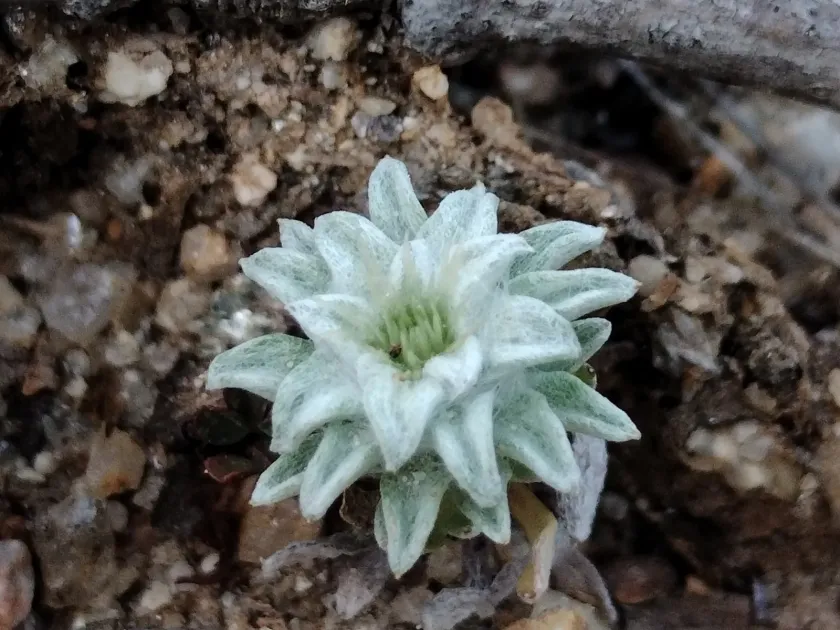
Description
Growing requirements
Filago carpetana is an annual herbaceous plant belonging to the Asteraceae family. It is a specialized species that exhibits significant adaptations for survival in arid Mediterranean-type climates.
The distribution of Filago carpetana is limited primarily to specific regions of the Iberian Peninsula. It typically inhabits dry, sandy, or rocky habitats where low competition and high solar radiation define the environment.
A distinctive feature of this plant is its dense, silvery-grey tomentose indumentum covering the leaves and stems. This physical trait serves as a crucial adaptation to prevent excessive water loss and reflect strong sunlight.
The growth pattern of Filago carpetana is opportunistic, responding rapidly to limited rainfall events. It completes its lifecycle within a relatively short vegetation period, ensuring reproduction before the onset of extreme summer droughts.
Taxonomically, it belongs to the tribe Gnaphalieae, characterized by specialized flower heads (capitula). These structures are often hidden or surrounded by leafy bracts, which protect the developing seeds from herbivores and drying winds.
Main diseases and pests
The primary threats to Filago carpetana populations include soil erosion and habitat fragmentation. As a niche specialist, it cannot easily migrate when its specific environmental conditions are altered by land use.
Fungal infections, such as powdery mildew or various forms of root rot, represent the main biotic stressors. These diseases are usually triggered by environmental fluctuations, particularly unseasonable humidity levels.
Invasive plant species can outcompete Filago carpetana by overshadowing its small rosettes. In habitats where soil fertility is slightly improved, more aggressive species quickly displace this slow-growing plant.
Grazing pressure from local herbivores may occasionally damage individual plants, although their woolly appearance often discourages excessive browsing. However, trampling by livestock in sensitive areas can be destructive.
Climate change poses a long-term risk to the survival of the species, as rising temperatures and shifting precipitation patterns may exceed the ecological limits of its small native range.