
Desert cottonrose
Filago desertorum
Description
Growing requirements
Desert cottonrose (Filago desertorum) is a herbaceous annual plant belonging to the Asteraceae family. It is naturally adapted to survive in extreme desert environments, characterizing itself as a resilient species in arid soil conditions.
The plant originates from desert regions where it has developed specific evolutionary mechanisms to cope with water scarcity. Its distribution is focused on sandy and rocky substrates where competition from other vegetation is minimal.
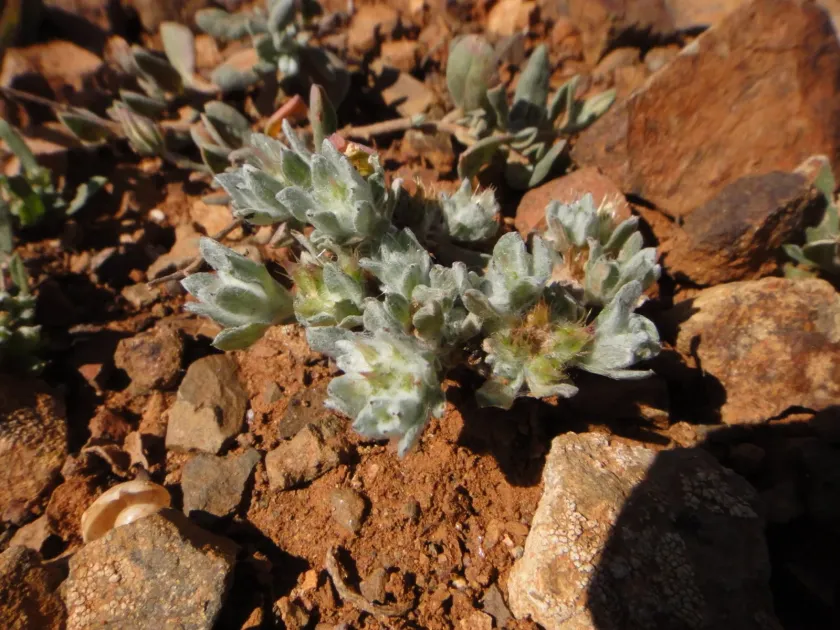
Botanical characteristics feature a greyish-white dense pubescence on all aerial parts. This structure serves as a natural barrier against water loss and heat stress, allowing the plant to thrive under direct sunlight.
Growing conditions demand high solar radiation and excellent drainage. The species cannot tolerate waterlogged soils, as excessive moisture leads to rapid root system decay and high susceptibility to opportunistic pathogens.
In agricultural terms, it is primarily regarded as a spontaneous component of semi-arid pastures. Its utilization is confined to extensive livestock grazing, providing a supplementary source of biomass during the early spring season.
Main diseases and pests
Main diseases affecting desert cottonrose include various species of powdery mildew. These fungal infections appear during unusually wet weather cycles and negatively impact the plant's overall vitality and aesthetic appeal.
Rust diseases are also a concern, manifesting as pustules on stems and foliage. These infections can inhibit photosynthesis and reduce the plant's ability to produce viable seeds before the end of the growing season.
Pests such as aphids are frequently observed, particularly in early summer. These insects thrive on the tender shoots and can cause significant damage to the plant structure through the extraction of plant sap.
Orthoptera species, particularly locusts, represent a critical threat to the population density in desert regions. They can cause widespread defoliation, significantly reducing the survival chances of the local stands.
Environmental threats such as soil compaction from overgrazing are major factors in the degradation of the habitat. When the soil becomes too compact, the delicate seedlings of Filago desertorum fail to establish themselves effectively.