
Filago anatolica
Filago anatolica
Description
Growing requirements
Filago anatolica, commonly known as a type of cudweed, is an annual herbaceous plant belonging to the Asteraceae family. It is primarily recognized for its ability to thrive in harsh, arid environments where many other plant species fail to establish.
The plant is native to the regions of the Eastern Mediterranean, Anatolia, and parts of the Middle East. Its evolutionary history has made it perfectly adapted to semi-arid climates, characterized by hot, dry summers and limited precipitation.
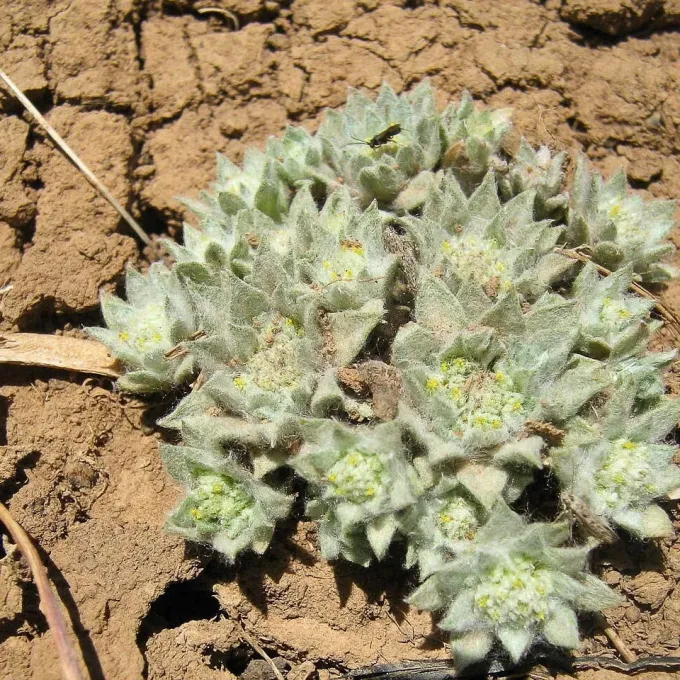
Botanically, Filago anatolica is distinguished by its woolly, greyish-white pubescence covering the stems and leaves. This layer of trichomes serves as an essential adaptation to reflect intense sunlight and reduce water loss through transpiration.
Regarding soil requirements, the species favors light, well-drained, and nutrient-poor soils. It is frequently found on sandy or rocky substrates where minimal organic matter is available, confirming its status as a robust pioneer plant in challenging habitats.
Agricultural management for this species is virtually non-existent, as it is not a commercial crop. However, in ecological restoration projects, it is valued for its hardiness and ability to stabilize soil surfaces in drought-prone areas.
Main diseases and pests
The main threats to Filago anatolica populations are associated with habitat degradation and sudden shifts in microclimatic conditions. Excessive soil moisture is the primary physiological stressor that leads to root rot and fungal colonization.
Fungal diseases, including powdery mildew, can significantly affect the plant when exposed to humid conditions for extended periods. The lack of ventilation in dense plant stands can further exacerbate the susceptibility of the plant to these pathogens.
Pest pressure is relatively low compared to other Asteraceae members, although aphids can occasionally infest the apical parts of the plant. The physical barrier provided by the dense, woolly hair significantly hinders insect activity and feeding.
Competition from invasive weeds poses a significant challenge. As a slow-growing, low-stature plant, Filago anatolica is easily overshadowed by faster-growing grasses or broad-leaved species in enriched soil environments.
Anthropogenic land use, including overgrazing and industrial development, represents the most critical threat to its native distribution. Maintaining its natural range requires the protection of undisturbed, arid, and semi-arid landscape mosaics.