
Field rose
Rosa arvensis Huds.
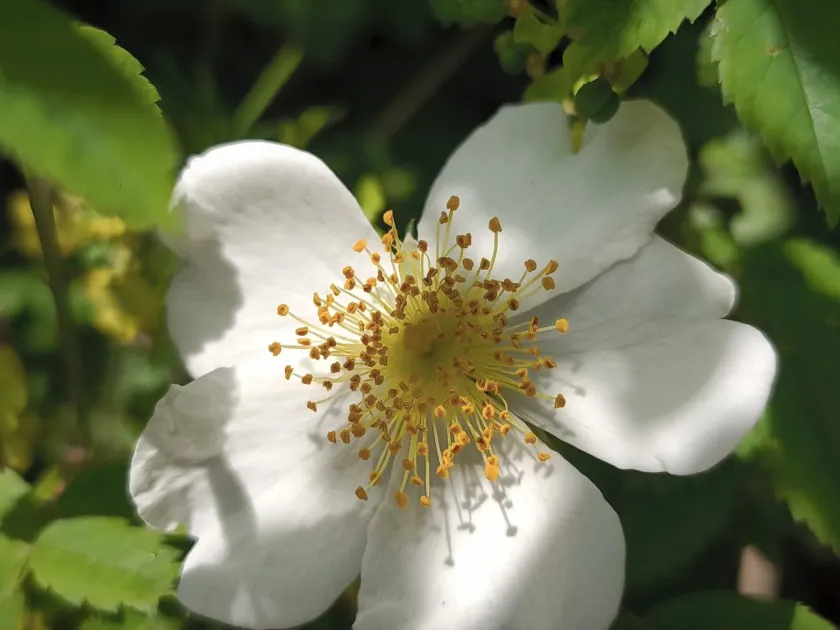
Description
Growing requirements
The field rose (Rosa arvensis Huds.) is a perennial shrub belonging to the Rosaceae family. Native to Europe, this species is well-known for its trailing or climbing habit, often found in hedgerows, scrublands, and forest edges where it thrives in diverse environments.
Cultivation of this plant requires well-drained, fertile soil that maintains consistent moisture levels. The species is highly adaptable but performs best in neutral to slightly acidic soils. It requires adequate space to spread its long, arching stems, making it unsuitable for confined garden spaces without proper pruning management.
Regarding climate, Rosa arvensis is remarkably hardy, capable of withstanding the variable temperatures of temperate zones. While it prefers sunny conditions for optimal flowering, it demonstrates significant tolerance for partial shade, which distinguishes it from many other commercial rose varieties.
In agricultural and ornamental sectors, this plant is primarily used for ecological restoration, hedge formation, and landscape beautification. It is highly valued as a nectar source for pollinators and serves as a vital component in supporting local biodiversity in rural and garden settings.
Maintenance routines involve annual pruning to remove dead or aging wood, which encourages fresh growth and better flowering. Propagation is typically achieved through hardwood cuttings or sowing stratified seeds, ensuring that the genetic diversity of the plant remains intact for future cultivation.
Main diseases and pests
Common pathological threats include powdery mildew and black spot, both of which are triggered by stagnant air and excessive leaf moisture. Maintaining proper plant spacing is essential to minimize the risk of these fungal infections during the growing season.
Insect pests, specifically aphids and spider mites, are frequent visitors that can weaken the plant by feeding on sap. Integrated pest management strategies, such as promoting natural predators and using targeted sprays, are recommended for maintaining plant health.