
Wood anemone
Anemone nemorosa L.
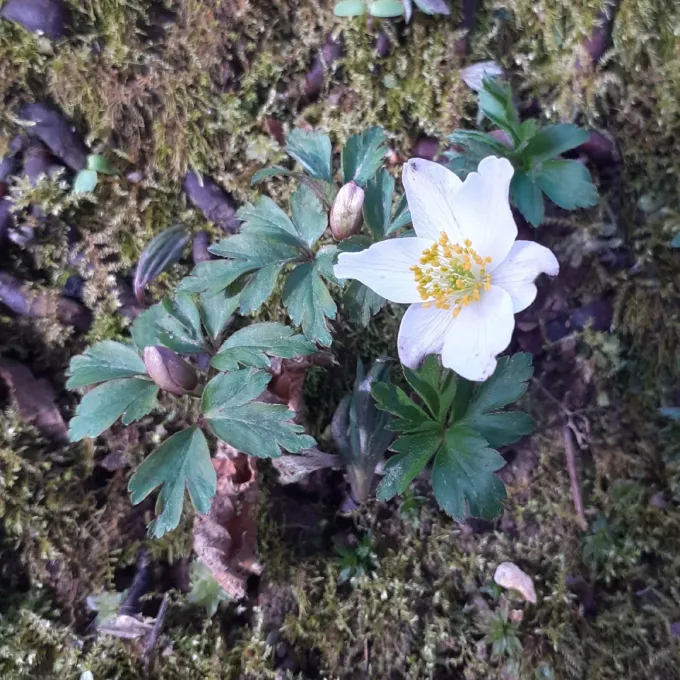
Description
Sowing dates
Propagation is primarily achieved through rhizome division. The best time to lift and divide the plant is just after it has finished flowering, while the leaves are still visible, which helps to locate the root mass.
Rhizome segments should be planted about 3–5 cm deep. Ensure that each segment possesses at least one or two growth buds to ensure successful establishment in the new location.
Seed propagation is possible but challenging due to the short lifespan of the seeds. It is recommended to sow seeds immediately upon harvest in a shady seedbed with moist, loose soil.
After planting, the area should be kept mulched to maintain stable moisture levels and prevent soil temperature fluctuations that might inhibit early root development.
When mass-planting, spacing the rhizomes 15–20 cm apart allows for steady colonization, creating a beautiful carpet effect that persists for many years.
Growing requirements
The Wood anemone (Anemone nemorosa L.) is a perennial herbaceous plant belonging to the Ranunculaceae family. It is a classic woodland ephemeroid native to temperate regions across Europe and Western Asia.
The plant thrives in moist, humus-rich, and well-draining soils. It is typically found in deciduous forests where it can take advantage of the sunlight available before the canopy trees leaf out fully.
Botanically, it features a slender, creeping rhizome that allows the plant to spread slowly and form expansive colonies over time. Its delicate white or pale pink flowers appear early in the spring.
Environmental requirements include a cool and shaded position. It is highly intolerant of drought, requiring consistent moisture throughout its active growing season to support its delicate foliage.
In a garden setting, it works best in naturalistic planting schemes, rock gardens, or under the shade of trees, where the microclimate matches its native forest habitat.
Main diseases and pests
The Wood anemone is generally robust but may suffer from powdery mildew in dry, stagnant conditions. Improving air circulation around the plants can effectively mitigate this risk.
Slugs and snails are the most common pests, as they find the tender spring foliage highly attractive. Physical barriers or organic molluscicides may be necessary in high-pressure areas.
Root rots can occur if the soil remains waterlogged for extended periods. Ensuring good soil structure and drainage is the most effective preventative measure against fungal infections.
Foliar nematodes can occasionally infect the leaves, causing distorted or discolored growth. Infected plants should be promptly removed and disposed of to protect the rest of the colony.
Maintaining a clean growing environment by removing dead or diseased plant debris in late summer helps reduce the overwintering sites for both fungal pathogens and insect pests.