
Tuolumne fawn lily
Erythronium tuolumnense
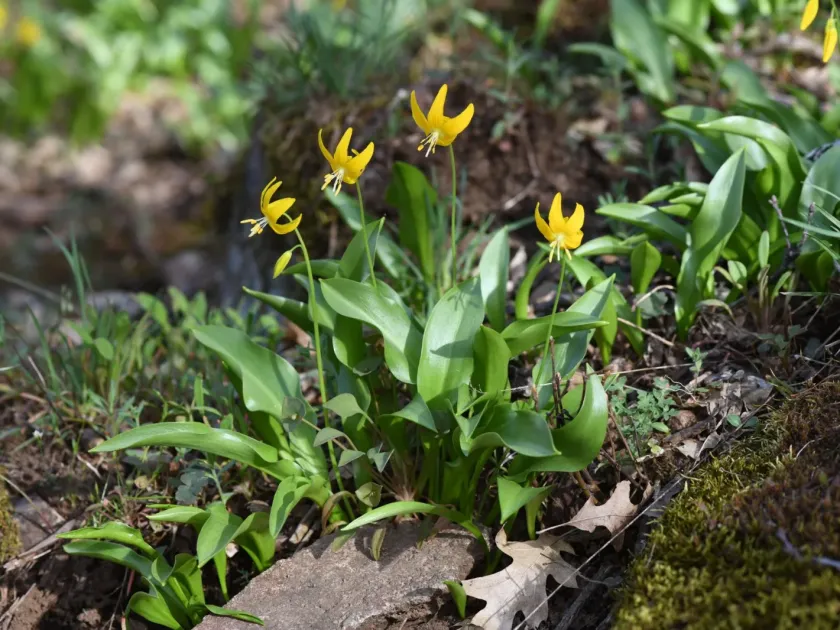
Description
Growing requirements
The Tuolumne fawn lily (Erythronium tuolumnense) is a perennial bulbous plant belonging to the Lily family (Liliaceae). It is a rare endemic species originating from the Tuolumne County in California, where it thrives in shaded, woodland environments.
This plant is highly valued for its striking spring display, featuring bright yellow, swept-back flowers and attractive, often mottled foliage. It produces large, elongated bulbs that persist and multiply slowly, forming beautiful clumps over several years.
For successful cultivation, this plant requires cool, shady conditions that mimic its native forest habitat. It performs best when planted under deciduous trees, where it can enjoy spring sun before the canopy closes, followed by shade during the hot summer months.
Soil requirements include excellent drainage, high organic content, and a moisture-retentive structure. A neutral to slightly acidic pH is ideal, and it is essential to ensure that the soil remains cool during the plant's dormant summer phase.
The agricultural practice for this species focuses on minimal disturbance. Mulching with leaf mold or compost is recommended to maintain moisture and soil fertility. Avoid excessive disturbance of the dormant bulbs, as they prefer to remain established in the same location for long periods.
Main diseases and pests
Primary threats to the health of Erythronium tuolumnense include bulb rot, which is often a result of poor drainage and waterlogged conditions during the winter dormancy period.
Slugs and snails are major pests that target the emerging succulent foliage in the early spring, potentially causing severe damage to the plant's photosynthetic apparatus.
Fungal infections, such as Botrytis, can spread rapidly if the environment is too humid or if there is insufficient airflow between the plants in a cluster.
Soil-dwelling larvae, including various types of grubs, can feed on the bulbs, which weakens the plant and leaves it vulnerable to secondary infections.
Integrated pest management strategies should prioritize mechanical barriers against slugs and maintaining optimal hygiene in the garden to prevent the spread of soil-borne pathogens.