
Englerodaphne
Englerodaphne
Englerodaphne is a genus of evergreen shrubs belonging to the family Thymelaeaceae. Native primarily to Eastern and Southern Africa, these plants are adapted to diverse tropical environments, ranging from dense forest understories to high-altitude mountain grasslands.
What the section contains

Englerodaphne
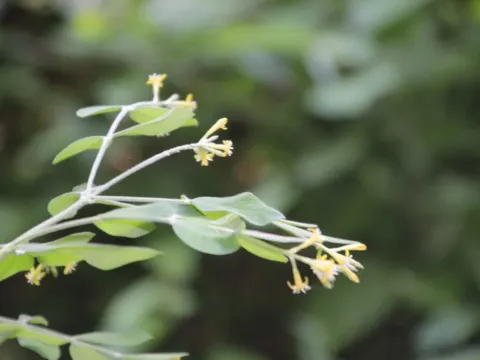
Botanically, the plant is recognized for its leathery foliage and small, fragrant blossoms arranged in clusters. A distinct feature of the genus is the tough, fibrous nature of the inner bark, a trait commonly found in many members of the Thymelaeaceae family, which provides structural integrity to the stems.
In terms of soil requirements, Englerodaphne thrives in well-drained, slightly acidic substrates rich in organic matter. Proper soil aeration is crucial for the development of its root system, and the plant generally avoids waterlogged conditions that can lead to root rot.
Environmental conditions play a critical role in the growth of this genus. It prefers stable tropical temperatures and consistent humidity levels. While it can withstand moderate fluctuations, protection from severe frost is essential, as the species is not physiologically adapted to sub-zero temperatures.
Regarding its utility, the plant has historically been utilized by indigenous populations for its high-quality bast fibers. The bark is harvested and processed to create durable cordage and weaving materials, demonstrating the traditional ecological knowledge surrounding the plant's structural properties.