
Edgeworthia gardneri
Edgeworthia gardneri
Description
Growing requirements
Edgeworthia gardneri is a deciduous shrub belonging to the Thymelaeaceae family, native to the Himalayan region and parts of East Asia. It is valued for its unique growth habit and its resilient bast fibers.
The plant thrives in subtropical climates with high humidity and mild winters. It prefers temperatures between 18°C and 25°C and requires a frost-free environment to maintain steady, healthy vegetative growth.
Well-draining, humus-rich soil with a slightly acidic to neutral pH is essential for optimal performance. The plant is sensitive to waterlogging, which can cause root rot, so proper site selection and soil preparation are critical.
It prefers partial shade, as intense direct sunlight can scorch the leaves and weaken the overall plant vitality. Wind protection is also recommended to prevent physical damage to the soft, flexible branches.
Regular irrigation is necessary throughout the growing season to ensure vigorous development. Mulching the root zone helps maintain soil moisture levels and suppress weed competition during the early establishment phase.
Yield
The primary agricultural utility of Edgeworthia gardneri is the extraction of high-quality bast fiber. This fiber is highly sought after for its exceptional strength and durability, particularly in specialized paper manufacturing.
Traditional methods involve harvesting the stems, steaming, and processing the inner bark. The resulting pulp is used to create premium-grade paper known for its resistance to tearing and longevity.
Yields are maximized through systematic pruning, which encourages the growth of long, straight, fiber-rich shoots. Plantation management often involves periodic harvesting cycles to ensure a continuous supply of raw material.
Beyond pulp production, the flexible branches have been historically used in weaving and various artisanal applications. The plant serves as both a source of industrial material and an ornamental asset.
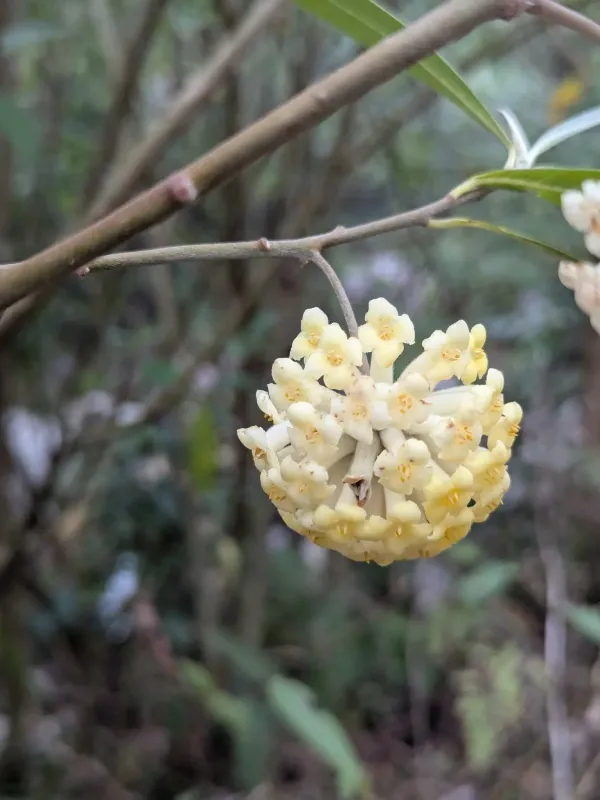
The ornamental value is derived from its fragrant, golden-yellow terminal inflorescences that appear in early spring. This dual-purpose utility makes it a versatile crop in compatible climatic zones.
Main diseases and pests
The main threats to Edgeworthia cultivation include fungal pathogens that exploit poor soil drainage and stagnant air conditions. Root rot and leaf spots are common issues in overly humid environments.
Pests such as aphids, mites, and scale insects can affect the foliage and stems. Integrated pest management strategies, including regular monitoring and the use of botanical insecticides, are standard practice.
Winter injury is a concern in marginal climates where temperatures may drop significantly. Protective covers and deep mulching are necessary to shield the root system from freezing and frost damage.
Weed encroachment is a significant challenge for young plantations, necessitating either mechanical removal or the use of heavy mulching layers to minimize labor and protect the shrub roots.
Physical damage during harvest or maintenance can invite pathogens, so clean cutting techniques are crucial. Ensuring adequate plant spacing also helps in reducing the humidity build-up that promotes disease spread.