
Embelia procumbens
Embelia procumbens
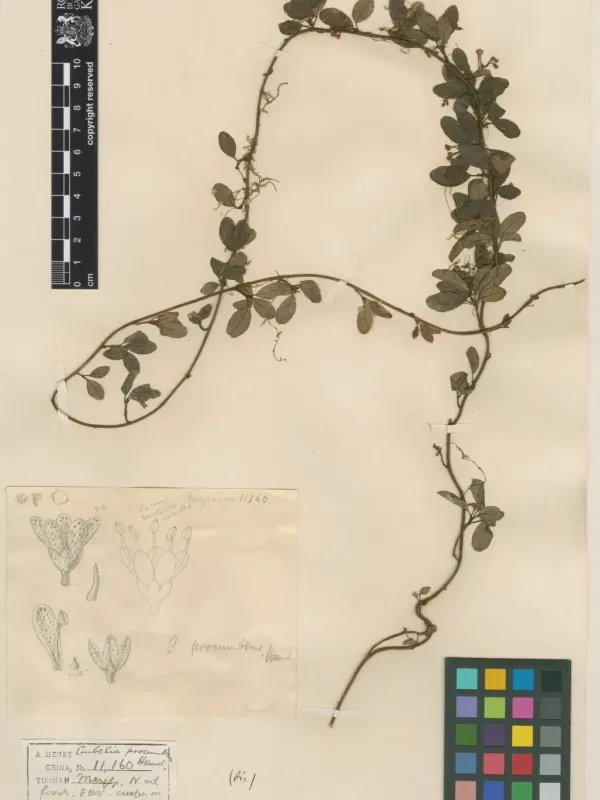
Description
Growing requirements
Embelia procumbens is a prostrate herbaceous plant belonging to the Primulaceae family, specifically within the Myrsinaceae subfamily. The plant is characterized by its trailing stems that readily root at the nodes, creating a dense, creeping ground cover in suitable habitats.
Native to the tropical regions of Asia, this plant naturally occupies understory habitats where light is filtered and humidity remains consistently high. Its botanical structure reflects adaptation to moisture-rich environments, such as stream banks and dense forest floors with nutrient-dense soil.
To cultivate Embelia procumbens successfully, growers must replicate high-humidity tropical conditions. The species requires stable temperatures, ideally between 22 and 28 degrees Celsius, and is highly intolerant of direct, intense sunlight, which can cause leaf scorch and dehydration.
The substrate must be highly permeable, utilizing a mixture of peat, leaf mold, and sand to provide essential aeration. Proper drainage is a critical factor in the cultivation process, as the roots are prone to rot if the soil remains waterlogged without proper oxygen circulation.
From a utility perspective, Embelia procumbens is primarily recognized for its pharmacological properties. Research focuses on the secondary metabolites present in the plant tissues, which have been historically utilized for their potential anti-inflammatory and anthelmintic effects in traditional medicinal practices.