
Embelia guineensis
Embelia guineeinsis
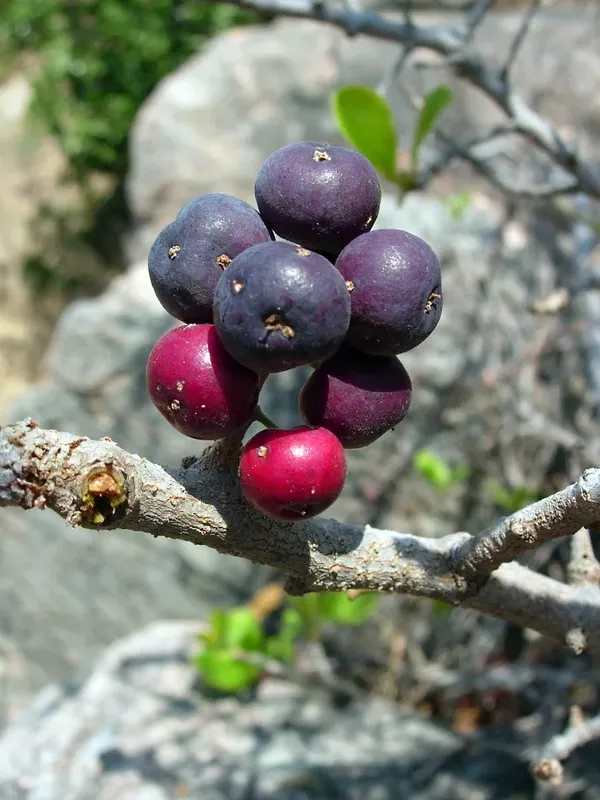
Description
Growing requirements
Embelia guineensis is a perennial woody climber or shrub belonging to the Primulaceae family. It is native to the tropical forests of West and Central Africa, thriving in environments characterized by dense vegetation and humid tropical conditions.
The plant requires high ambient humidity and consistent tropical temperatures year-round to flourish. It does not tolerate prolonged frost or extreme drought, limiting its viable cultivation range to tropical and subtropical humid regions.
Successful cultivation depends on rich, well-draining soils with high organic matter content. Because it naturally grows in the understory of rainforests, it prefers protected sites with filtered light rather than direct, intense sunlight.
Agronomic practices for this species include proper support structures for its climbing habit and careful water management to maintain soil moisture without causing root rot. Seed propagation is the primary method of cultivation in experimental and medicinal plantations.
The plant has significant ethnobotanical value, particularly in traditional medicine systems across Africa. Its fruits and roots are widely documented for their anthelmintic and antimicrobial properties, making it a subject of interest for both local usage and phytochemical research.