
Dysphania graveolens
Dysphania graveolens
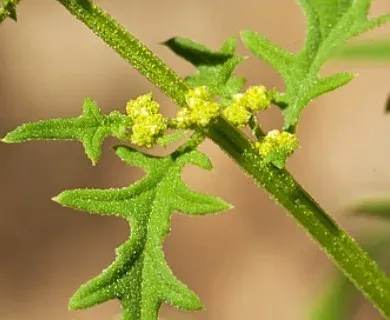
Description
Sowing dates
Dysphania graveolens, a member of the Amaranthaceae family, is an annual herbaceous plant known for its pungent aroma. Sowing should take place in spring once the threat of frost has passed and soil temperatures consistently reach 15-18 degrees Celsius.
For earlier production, growers often use a seedling method in greenhouses or cold frames. Seeds are sown in a high-quality substrate approximately 40 days before the final transplanting date to ensure a strong root system development.
Optimal spacing is essential to ensure adequate airflow, which is critical for healthy growth. Rows should be spaced 45 to 60 centimeters apart, with individual plants thinned to a distance of 20 to 30 centimeters within the rows.
Because the seeds are extremely small, they require only a shallow covering of soil or can be pressed into the surface. Maintaining consistent surface moisture is vital during the germination phase to ensure successful establishment.
Early season weed management is paramount, as the young seedlings are susceptible to competition. Consistent monitoring after germination will ensure that the crop establishes dominance over invasive weeds.
Growing requirements
This crop thrives in well-drained, fertile soil types, ranging from sandy loams to silty loams. It prefers a neutral to slightly alkaline soil pH and requires full sun exposure to maximize the production of its characteristic aromatic oils.
While the plant shows moderate drought tolerance, it performs best with regular irrigation, particularly during dry spells. However, waterlogging must be avoided, as it can lead to root degradation and lower the quality of the essential oils.
Fertilization should be balanced; while nitrogen helps in leaf development, excessive nitrogen can reduce the concentration of aromatic compounds. Potassium and phosphorus are recommended during the transition to the flowering stage.
Climate-wise, Dysphania graveolens prefers warm, dry conditions. Areas with high humidity and stagnant air are less ideal and may require stricter spacing measures to compensate for the microclimate.
Crop rotation is a key component of successful cultivation. It should not be planted immediately following other species of the same family to minimize the risk of soil-borne diseases that are specific to the Amaranthaceae group.
Yield
The yield of Dysphania graveolens is highly dependent on effective management of soil nutrients and water. When grown under ideal conditions, the plant produces a significant amount of biomass that can be harvested for its culinary or medicinal properties.
Strategic thinning and weed control are the primary factors in maximizing per-hectare productivity. By reducing plant-to-plant competition, the crop can utilize space more efficiently, resulting in stronger, more robust individual specimens.
For commercial growers, yield is often measured by the quantity of dried leaves and floral parts. Implementing a multi-cut harvesting strategy can help increase the total output over the course of a single growing season.
Seed production yields rely heavily on the timing of the harvest. Allowing the seeds to reach full maturity ensures a high germination rate for future seasons while providing a viable byproduct for the agricultural market.
As an aromatic crop, the economic value is also linked to the quality of the essential oil profile, which is optimized when the plant is given sufficient space and adequate sun exposure throughout its life cycle.
Main diseases and pests
Fungal diseases, such as downy mildew or root rot, are the primary threats to this crop. These are most common in regions with high humidity or poor soil drainage, necessitating careful irrigation management.
Insect pests like aphids may occasionally infest the plant, particularly in the seedling stage. However, the plant's strong natural odor often serves as a deterrent against a wide range of common agricultural pests.
Preventative measures include regular hoeing of the soil between rows, which helps break the lifecycle of soil-borne pathogens and improves root aeration. This mechanical intervention is often more effective than chemical treatments.
Maintaining a clear field and ensuring that no secondary hosts for diseases are present in the vicinity of the planting area is essential for sustainable production.
If an infestation occurs, biopesticides are generally preferred over synthetic ones to preserve the integrity of the essential oils, which are easily tainted by chemical residues.
Harvesting
The harvest of green mass should occur just as the plant begins its flowering phase. This is when the aromatic volatile oils are most concentrated, ensuring a high-quality product for the consumer.
Plants are cut several centimeters above the ground, allowing for potential regrowth. Careful handling is required during the transport phase to prevent damage to the delicate leaves and flower heads.
Drying is a critical post-harvest step. Material should be dried in a shaded, well-ventilated area. Direct sunlight must be avoided to prevent the evaporation or degradation of the plant's fragrant components.
Once dried, the leaves are separated from the stems and processed according to the final use. Proper storage in airtight containers is necessary to maintain the intensity of the aroma over time.
Continuous monitoring of moisture levels in the stored product is necessary to prevent spoilage, ensuring that the harvested batch maintains its commercial value throughout the supply chain.