
Crested goosefoot
Dysphania aristata
Description
Growing requirements
Crested goosefoot (Dysphania aristata) is an annual herbaceous plant belonging to the Amaranthaceae family. It is widely recognized for its robust growth habit and ability to thrive in diverse environments, often colonizing disturbed habitats and open fields.
Originating from parts of Eurasia, this species is well-adapted to continental climates with hot summers and significant diurnal temperature variations. Its resilience makes it a subject of interest for low-input agricultural systems in arid or semi-arid zones.
The plant demonstrates low soil fertility requirements, performing well in nutrient-poor substrates, including gravelly or sandy soils. However, it responds positively to well-drained loams, where it can reach its maximum potential for biomass production.
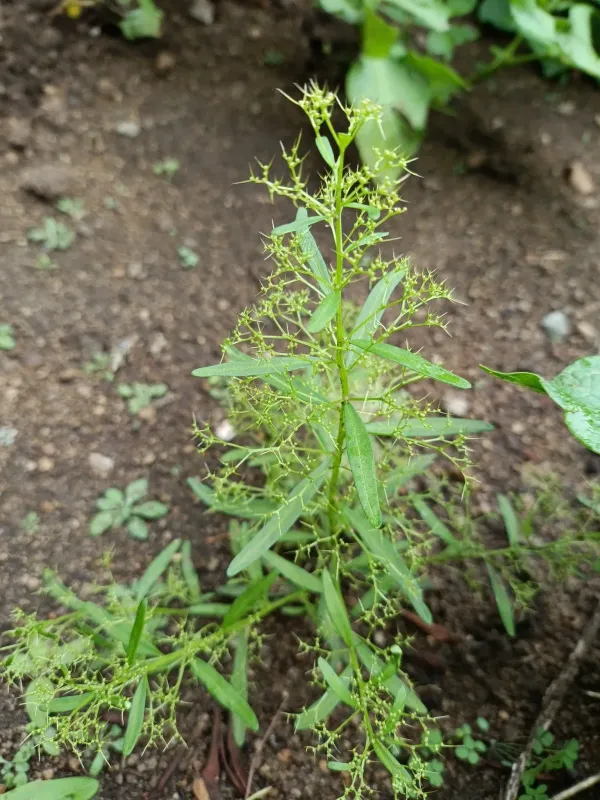
Botanically, Dysphania aristata is identified by its branching habit and distinctive spiny or awned bracts surrounding its inconspicuous flowers. The leaves are generally lanceolate, and the overall plant structure allows for efficient photosynthesis under high-light conditions.
Agricultural use is primarily focused on its potential as a supplementary forage crop. Its ability to produce significant foliage during dry periods when other grasses might go dormant provides a valuable nutritional bridge for livestock grazing in extensive production systems.
Main diseases and pests
The most common disease impacting the crop is powdery mildew, which typically occurs when high humidity is combined with poor airflow between plants. Planting at appropriate densities is a key management strategy to mitigate this risk.
Pests such as leaf-feeding beetles are known to damage the foliage during the seedling stage. Monitoring the fields during the early vegetative phase is essential to ensure a healthy stand and optimal establishment of the crop.