
Stinking goosefoot
Dysphania botrys
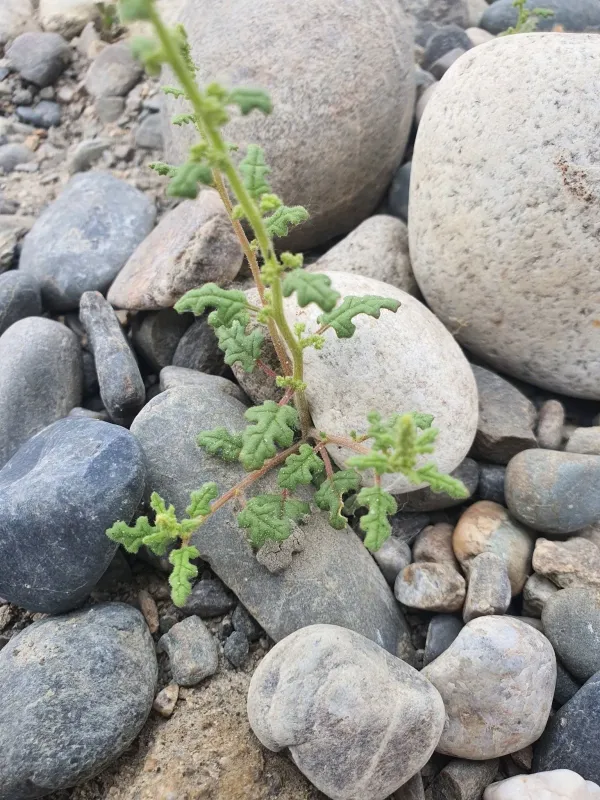
Description
Sowing dates
Sowing of Dysphania botrys is typically carried out in early spring when the soil temperature reaches 8–10 degrees Celsius. The seeds are sown at a shallow depth of 1–2 centimeters, as they are sensitive to the density of the topsoil layer.
In commercial operations, row sowing with spacing between 30 and 45 centimeters is practiced. This method allows for the mechanization of subsequent crop maintenance and ensures optimal light exposure for each plant throughout the growing season.
The seeds of this plant possess long-term viability, yet it is recommended to use fresh sowing material for high-quality production. The optimal planting density depends on the purpose of cultivation, as essential oil harvesting requires closer spacing.
After sowing, light rolling of the soil surface is recommended. This promotes better contact between the seeds and the moist substrate and prevents them from being blown away by the wind, which is crucial in arid regions.
If seedling production is necessary, Dysphania botrys can be started in greenhouses, sowing seeds one month before the planned transplanting into open ground. This approach extends the growing period and results in an earlier harvest of biomass.
Growing requirements
Dysphania botrys, a member of the Amaranthaceae family, is a heat-loving plant that prefers open, sun-exposed areas. It exhibits high drought resistance, allowing the crop to be cultivated in nutrient-poor sandy soils.
Optimal development is observed in light sandy loam or loamy soils with a neutral or slightly alkaline pH. The plant does not tolerate waterlogging and excessive humidity well, so elevated areas are preferred for cultivation.
During the active growth phase, the crop requires moderate irrigation, especially during the onset of flowering. As a typical xerophytic species, it is capable of adapting to water-deficit conditions due to its well-developed root system.
The optimal temperature for vegetation is 20–25 degrees Celsius. Sudden night cooling during early growth stages can slow down development, which is why sowing dates should be aligned with regional climatic characteristics.
For high-quality essential oil accumulation, the plant requires high solar radiation intensity. When shaded, the plants stretch, lose their characteristic intense aroma, and reduce the productivity of secondary metabolites.
Yield
The yield of Dysphania botrys depends directly on the harvest stage and the agronomic conditions. The primary product is the above-ground part of the plant, which is harvested at the onset of mass flowering for maximum essential oil content.
The biological characteristics of the plant allow for significant vegetative mass production given regular cultivation of inter-row spaces. On average, up to 5–8 tons of fresh green mass can be harvested per hectare, depending on planting density.
Industrial use of Dysphania botrys includes applications in the perfume and pharmaceutical sectors. The high content of terpenoids makes it a valuable raw material for the production of aromatic compositions and folk medicine remedies.
To evaluate crop productivity, agronomists conduct sampling to measure essential oil concentration. The peak accumulation of volatile compounds occurs during the formation of inflorescences, making this the critical moment to begin harvesting.
The yield of dry raw material is typically around 20–25% of the fresh weight. Proper drying in the shade helps to preserve the aroma and biological activity of the valuable compounds found in the glandular hairs.
Main diseases and pests
Dysphania botrys possesses a specific aroma that repels many pests, yet it can still be subject to attacks by insects common to the Amaranthaceae family, such as various types of leaf miners and aphids.
Diseases occur most frequently when crop rotation is neglected or when soil moisture is excessive. Root rots are the most dangerous pathologies that can lead to total crop failure during early growth stages.
Powdery mildew can infect leaves under conditions of high air humidity and poor airflow within dense plantings. Preventive measures include maintaining optimal distance between plants to ensure good ventilation.
Weed control is a mandatory stage, as Dysphania botrys grows relatively slowly in the early stages and can be suppressed by faster-growing weeds. The use of herbicides requires caution due to the crop's sensitivity.
To minimize risks, it is recommended to maintain spatial isolation from other species of the Chenopodiaceae/Amaranthaceae family and to strictly follow fertilizer application rates, avoiding nitrogen excess that weakens the plant's immune system.
Harvesting
Harvesting of Dysphania botrys is conducted during the full bloom stage, when the concentration of essential oils reaches its peak. At this time, the plant exudes its most intense and pleasant aroma, and the glandular hairs are fully filled with secretions.
The harvesting method involves mowing the above-ground biomass at a height of about 10–15 centimeters from the soil surface. Using specialized mowers allows for rapid harvest from large areas without damaging the delicate stem structure.
Immediately after cutting, the raw material must undergo primary processing or drying. It is important to avoid direct sunlight on the harvested plants, as this causes rapid evaporation of essential oils and loss of commercial value.
Drying is performed in well-ventilated sheds or drying chambers at temperatures not exceeding 40 degrees Celsius. Exceeding this threshold causes the degradation of thermolabile components within the essential oil.
Storage of the finished product is carried out in airtight containers to prevent the evaporation of aromatic substances. Properly dried Dysphania botrys maintains its properties for up to a year, allowing for supply to processing facilities throughout the season.