
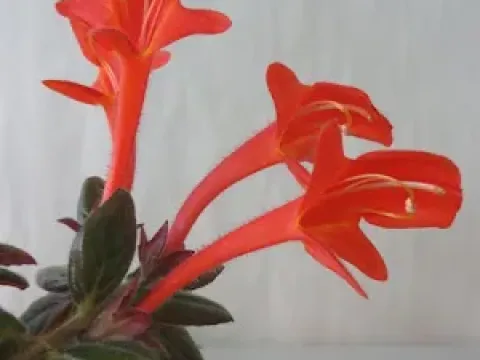
Drymonia
Drymonia
Drymonia is a genus of tropical perennial plants belonging to the Gesneriaceae family. Originating from the rainforests of Central and South America, these plants are characterized by their succulent stems, opposite leaves, and tubular, vibrant flowers that grow in epiphytic or terrestrial conditions.
What the section contains


Drymonia
The cultivation of Drymonia requires a climate that mimics the high humidity and stable temperatures of their natural habitat. Ideally, the plant should be kept in temperatures between 20°C and 25°C, with ambient humidity levels maintained consistently above 60% to ensure vigorous growth.
Light requirements for Drymonia are specific; they thrive in bright, indirect light. Direct sunlight can cause severe scorching of the leaves, while insufficient light leads to etiolated, weak stems and a lack of flowering. Proper positioning near a north or east-facing window is recommended.
The growing medium must be porous, acidic, and well-draining. A mix consisting of peat moss, perlite, and bark or coconut coir is preferred to prevent water stagnation. The substrate should be kept consistently moist but never waterlogged to protect the delicate root system.
Feeding should be carried out during the active growth season using a balanced, diluted fertilizer. Because Drymonia plants are sensitive to chemical buildup, flushing the soil with distilled or purified water periodically helps remove accumulated salts and maintains soil health.
Common pests that affect Drymonia include spider mites and mealybugs. Spider mites are particularly problematic in dry environments, as they create fine webs and cause leaf discolouration, while mealybugs tend to hide in leaf axils, sucking the plant's sap.
Root rot, often caused by overwatering or poor drainage, is the most common disease encountered by growers. Symptoms include wilting, yellowing of the lower leaves, and a soft, decaying base of the stem, which can be fatal if not addressed immediately.
Management of pests involves applying insecticidal soaps or systemic treatments that are safe for indoor plants. Maintaining high air circulation around the foliage is a key preventive measure against pest infestation and fungal growth.
Fungal infections, such as Botrytis, may occur if the foliage remains wet for extended periods in cool, stagnant air. Proper ventilation and avoiding overhead watering are essential to prevent the spread of these pathogens across the collection.
If disease symptoms are present, isolate the affected plant to prevent the spread of pests or spores. Pruning back dead or decaying material and repotting into fresh, sterile media is often the best recovery strategy for severely affected plants.