
Dracaena umbratica
Dracaena umbratica
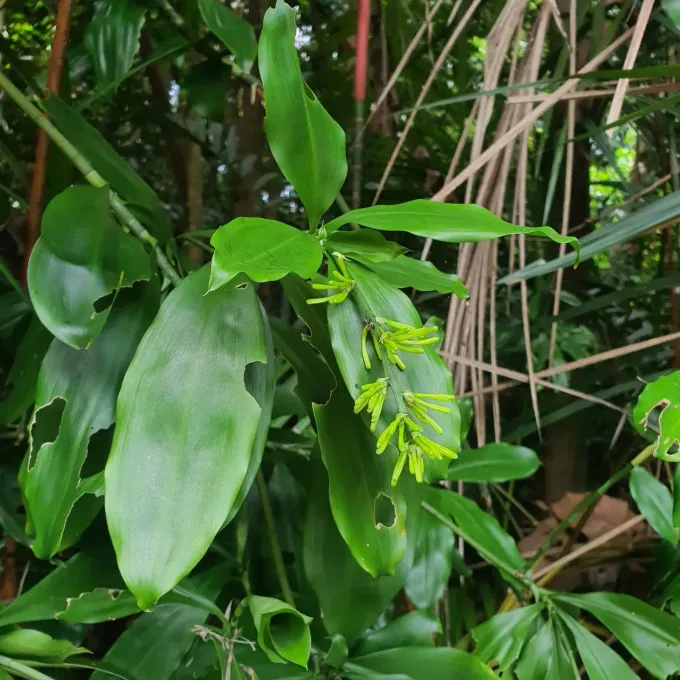
Description
Growing requirements
Dracaena umbratica is an evergreen perennial plant belonging to the Asparagaceae family. Native to the humid tropical forests of West and Central Africa, it is primarily cultivated for its elegant foliage.
The plant thrives in warm, stable climates with temperature ranges between 20°C and 25°C. It is intolerant of cold drafts and temperatures dropping significantly below 15°C, which can cause severe stress.
Soil requirements involve a well-draining, nutrient-rich substrate. A mix of peat, perlite, and pine bark is often used to ensure adequate aeration for the root system, preventing compaction over time.
Cultural practices include providing bright, indirect light, as the plant is naturally adapted to the filtered light conditions of the forest floor. Direct sunlight can bleach the leaves and damage their structure.
Routine maintenance involves balanced irrigation, allowing the surface of the soil to dry out between watering cycles. Occasional misting or the use of humidifiers helps mimic the plant's natural high-humidity habitat.
Main diseases and pests
Root rot caused by pathogenic fungi such as Pythium and Phytophthora remains the most common threat to this culture, typically stemming from waterlogged soil conditions.
Spider mites are prevalent in indoor environments with low humidity, causing stippling and discolouration of the leaves due to their sap-feeding activities.
Scale insects and mealybugs can infest the leaf axils and stems, secreting honeydew which often promotes the growth of unsightly sooty mold on the leaf surfaces.
Leaf spot diseases, often caused by bacterial or fungal pathogens, appear as dark or yellow-rimmed lesions and require immediate sanitation of the affected foliage.
Effective management strategies include maintaining good air circulation, regular monitoring for signs of infestation, and the application of horticultural oils or fungicides as necessary.