
Serrulated Dragon Tree
Dracaena serrulata
Description
Growing requirements
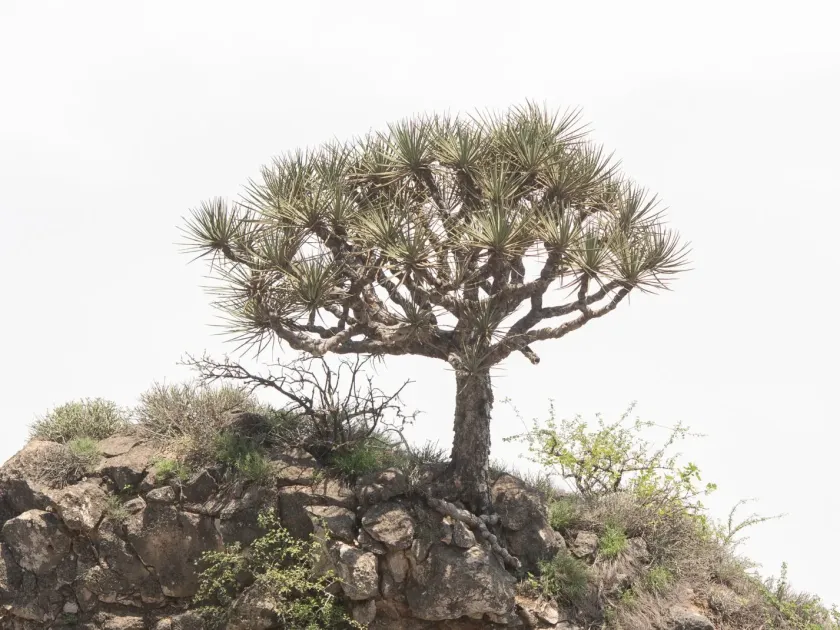
The Serrulated Dragon Tree (Dracaena serrulata) belongs to the Asparagaceae family. This unique tree-like succulent often develops an umbrella-shaped canopy, which is a classic adaptation to arid environments where it naturally thrives.
Its natural distribution is centered on the Arabian Peninsula, specifically within the rugged mountain landscapes of Yemen and Oman. The plant is highly adapted to tropical and subtropical dry climates, typically rooting in limestone-based rocky soils.
Successful cultivation requires intense solar radiation and an exceptionally well-draining substrate. The plant is extremely sensitive to waterlogged conditions, which lead to rapid root rot and degradation of the main stem base.
Stable warm temperatures are essential for growth; as the plant cannot tolerate freezing conditions, it is strictly managed as a greenhouse or indoor container specimen in temperate climate zones.
In its natural habitat, the tree exhibits a very slow growth rate, developing a thick, sturdy trunk marked by the scars of fallen leaves, which contributes to its high value in arid-style landscaping and architectural gardens.
Main diseases and pests
The most significant threat to this species is the onset of root or stem rot caused by overwatering. Ensuring the growing medium dries out completely between watering cycles is the primary defense against these pathogens.
Indoor cultivation is frequently challenged by infestations of scale insects and spider mites. These pests extract essential sap from the leaves, leading to chlorosis, stunted growth, and a weakened overall structure.
Mealybugs are another common threat, often hiding within the leaf axils under a protective white waxy substance. Managing them requires regular inspections and the application of specialized systemic insecticides.
Fungal leaf spot diseases may occur if the ventilation is poor and humidity levels rise too high. Ensuring consistent airflow around the canopy is critical for disease prevention in glasshouse conditions.
Accumulation of mineral salts from hard irrigation water can lead to marginal leaf burn. Using filtered or distilled water is recommended to maintain plant health and aesthetic appeal.