
Dracaena pinguicula
Dracaena pinguicula
Description
Growing requirements
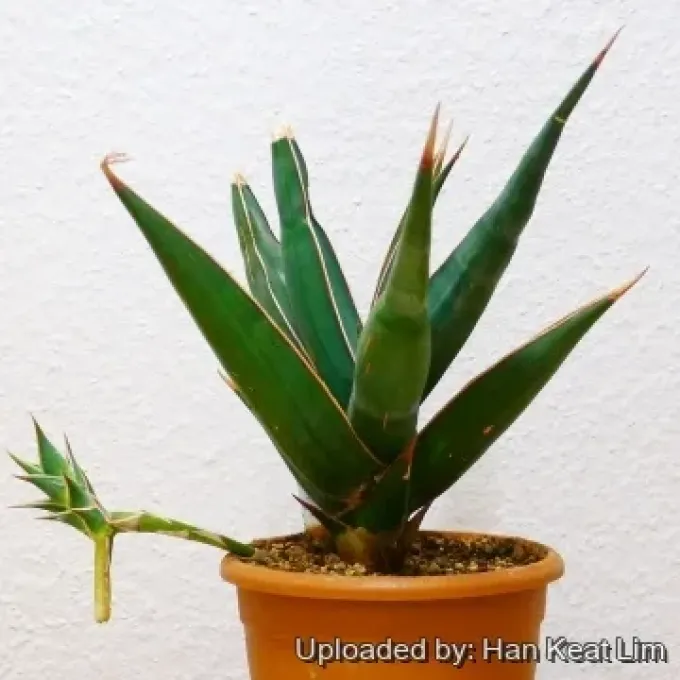
Dracaena pinguicula is a distinct succulent species belonging to the Asparagaceae family, highly prized by collectors for its thick, glaucous leaves and compact, rosette-like growth habit.
Native to the arid regions of Kenya, this plant thrives in limestone crevices, which necessitates an agricultural approach that mimics these rocky, well-draining conditions.
The primary requirement for this culture is intense light; however, it must be acclimated to avoid leaf scorch, making filtered bright sunlight the ideal condition for healthy development.
The substrate must be inorganic-heavy, combining coarse pumice, perlite, and a small amount of sandy soil to ensure that moisture does not remain trapped around the root zone.
Temperature management is straightforward: it requires warm days and cooler nights, mimicking its natural habitat, while remaining strictly protected from freezing temperatures during winter.
Main diseases and pests
The most significant threat to the health of Dracaena pinguicula is improper watering, which leads to root rot and irreversible tissue damage in the succulent base.
Common pests that pose a risk to the plant include mealybugs and spider mites, both of which thrive in indoor environments with poor ventilation.
Bacterial soft rot may also occur if moisture accumulates in the center of the rosette, especially during periods of high humidity or insufficient light levels.
Control strategies involve strictly withholding water during dormancy and using systemic pest management products if an infestation is detected early.
Regular monitoring of the leaf axils is recommended to catch the early stages of pest colonization, ensuring the plant retains its aesthetic and physiological integrity.