
Dracaena mannii
Dracaena mannii
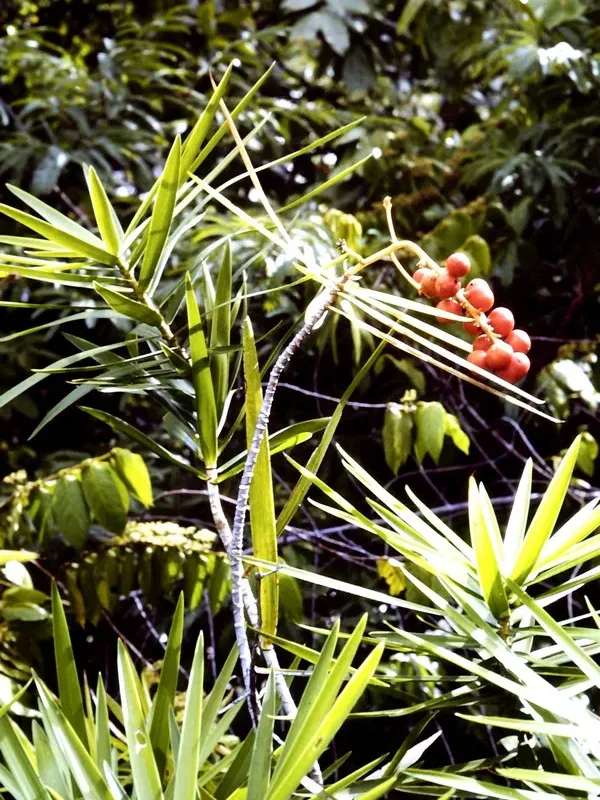
Description
Growing requirements
Dracaena mannii is a perennial evergreen species belonging to the Asparagaceae family. It is native to the tropical rainforests of West and Central Africa, where it thrives as a shrub or small tree in shaded, humid environments.
For successful cultivation, the plant requires a stable temperature range between 20°C and 25°C. Exposure to sudden temperature drops or cold drafts can cause significant stress, leading to leaf drop and stunted growth of the plant.
The soil should be well-drained and nutrient-rich. A mix of peat, bark, and perlite is often recommended to ensure proper aeration. Poor drainage is a major risk factor, as the roots are highly susceptible to rot if kept in saturated soil for extended periods.
Light requirements involve bright, indirect sunlight. While Dracaena mannii can tolerate partial shade, it requires sufficient light intensity to maintain its characteristic foliage structure and prevent the internodes from stretching excessively.
Watering must be done carefully, allowing the top layer of the soil to dry out between applications. Humidity levels should be kept relatively high, which can be achieved through regular misting or using commercial humidifiers in controlled environments.
Main diseases and pests
Spider mites represent a primary pest threat, especially in environments with low humidity. These pests feed on the cellular sap, resulting in discolored, speckled leaves and a general decline in the plant's health and aesthetic appearance.
Scale insects are another common problem that can infest the stems and undersides of leaves. Their presence can often lead to the development of sooty mold, which thrives on the honeydew secreted by these insects, further inhibiting photosynthesis.
Root rot, primarily caused by Phytophthora or Pythium species, is the most common disease associated with overwatering. Once the root system is damaged, it is difficult to restore, making prevention through strict irrigation management essential.
Leaf spot diseases, often fungal, can develop if the foliage remains wet for too long or if there is insufficient air circulation. Proper spacing between plants and maintaining a clean environment are crucial for minimizing the spread of spores.
Integrated pest management (IPM) practices, including the use of mild horticultural oils or specialized systemic insecticides, are recommended for controlling outbreaks while minimizing chemical residue on the plant tissues.