
Dracaena hybrid
Dracaena hybrids
Description
Growing requirements
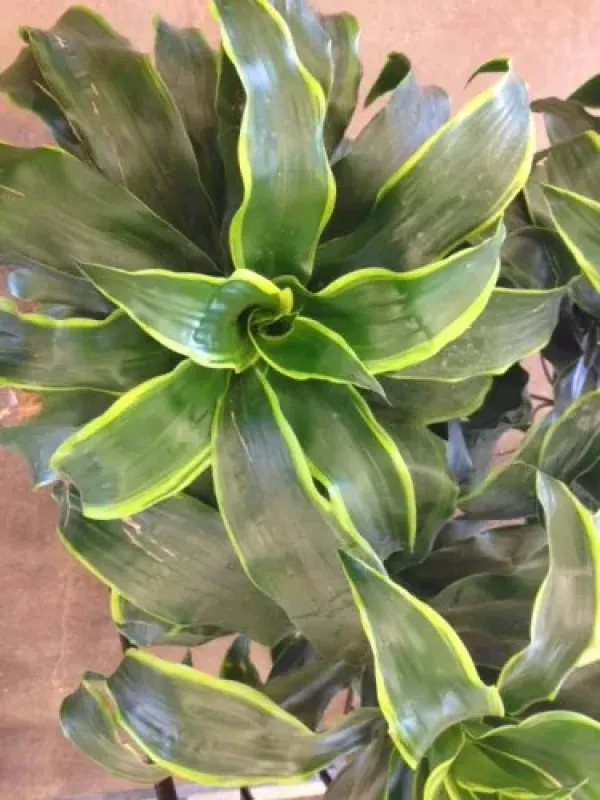
Dracaena hybrid belongs to the Asparagaceae family and encompasses various cultivars developed for interior landscaping and ornamental purposes. These hybrids are renowned for their architectural form and ability to thrive in controlled indoor environments.
The native range of the parent species includes tropical zones of Africa and Asia. Consequently, these hybrids require a warm climate, with ideal temperatures ranging between 18°C and 25°C. Stability in temperature is crucial to prevent physiological stress.
Soil requirements for Dracaena hybrids involve a well-draining, nutrient-rich potting medium. A mixture of peat, loam, and coarse perlite or sand at a 2:1:1 ratio is recommended to facilitate optimal gas exchange and water drainage.
Agronomic management requires consistent light exposure; while they tolerate low light, growth is significantly improved under bright, indirect light. Excessive sunlight should be avoided to prevent foliar scorching and tissue damage.
Irrigation practices must prioritize soil moisture management. It is essential to allow the surface layer of the substrate to dry between watering cycles to minimize the risk of root-zone anoxia and secondary fungal development.
Main diseases and pests
Scale insects are a common pest for Dracaena hybrids, appearing as hard, brown bumps on stems and leaf undersides. These insects suck sap, leading to stunted growth and the potential development of sooty mold on the foliage.
Spider mites often attack the plant in low-humidity environments. Their presence is indicated by fine webbing and small, yellow speckled lesions on the leaves, which can ultimately lead to total leaf drop if left untreated.
Fungal diseases, particularly stem rot caused by pathogens like Fusarium, pose a severe threat in overwatered conditions. The rot causes the stems to soften and lose structural integrity, making propagation or recovery difficult.
Leaf spot caused by Alternaria fungi manifests as dark brown lesions on the foliage. This often occurs when leaf surfaces remain wet for extended periods or when air circulation is inadequate in the production area.
Effective management involves consistent sanitation, removal of dead plant material, and the application of integrated pest management (IPM) techniques to ensure the longevity and health of the ornamental crop.