
Dracaena cochinchinensis
Dracaena cochinchinensis
Description
Growing requirements
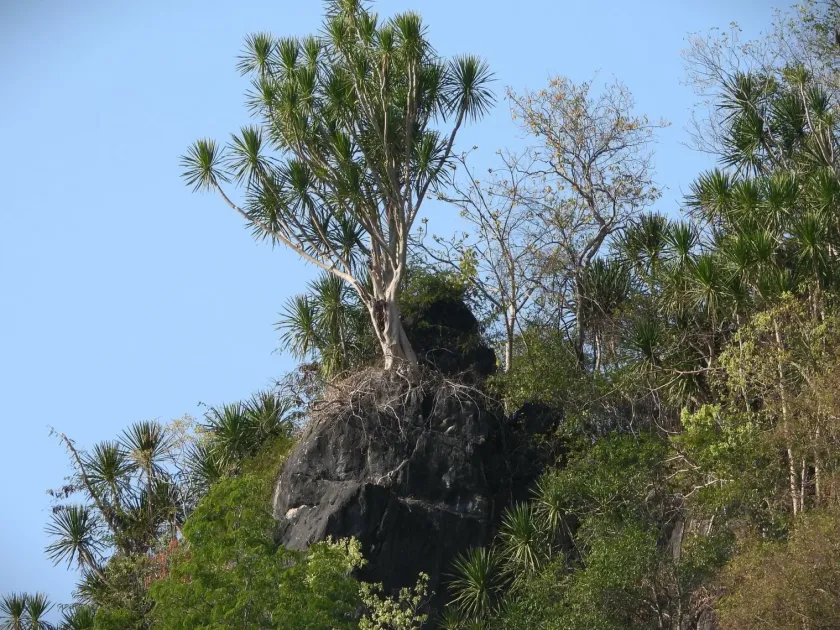
Dracaena cochinchinensis belongs to the Asparagaceae family. It is an evergreen arborescent plant capable of reaching heights of 10 meters, distinguished by a stout trunk and long, sword-shaped leaves that grow in terminal rosettes.
The species originates from the tropical regions of Southeast Asia, thriving particularly on limestone cliffs and mountainous terrain. Its natural habitat is characterized by rocky soils and a humid, subtropical to tropical climate.
For successful cultivation, the plant requires consistent temperatures ranging between 20°C and 30°C. It prefers bright, indirect light, as direct exposure to intense tropical sun can damage the foliage in young plants.
Soil requirements focus on excellent drainage to prevent root rot, as the species is sensitive to waterlogging. A substrate mix consisting of grit, loam, and organic matter is typically recommended for container or field growing.
The growth rate of Dracaena cochinchinensis is notably slow, necessitating long-term planning for plantations. Propagation is generally achieved via seeds or stem cuttings, requiring controlled greenhouse conditions for high success rates.
Yield
The primary economic product of this crop is the resin known as "Dragon's Blood." This deep red, fragrant substance is harvested by making controlled incisions in the bark of the trunk, which triggers the tree's natural defense mechanism.
Yield efficiency is directly linked to the maturity of the tree. Commercial harvesting typically does not commence until the plants are at least 15 to 20 years old, ensuring both quantity and chemical quality of the resin produced.
The resin contains high concentrations of phenolic compounds, making it valuable in pharmaceutical formulations, traditional medicine, and advanced cosmetics for its potent healing and anti-inflammatory properties.
In addition to resin, the plant has significant value in ornamental landscaping. Its architectural structure and drought tolerance make it a preferred specimen for luxury gardens and interior designs in warm climates.
Optimizing yields requires precise management of the harvest cycle, ensuring that trees recover between tapping sessions. Continuous monitoring of plant health is vital to maintain long-term production sustainability.
Main diseases and pests
Root and stem rot caused by fungal pathogens are the most significant threats to the species, particularly in poorly drained soils. Excess moisture promotes the proliferation of these organisms, which can be lethal if not detected early.
Pest pressures often include infestations by spider mites, scale insects, and mealybugs. These pests sap the plant's vitality by feeding on phloem sap, leading to stunted growth and reduced capacity to produce resin.
Sanitation practices are essential, especially during the resin extraction phase. Sterilizing tools between incisions is a standard procedure to prevent the transmission of bacteria and fungal spores into the plant's vascular system.
Environmental management, such as maintaining adequate air circulation, is crucial for preventing the onset of powdery mildew. Strategic spacing of plants helps mitigate the spread of diseases within dense plantation blocks.
Integrated pest management strategies are advised, emphasizing the use of eco-friendly biological controls. Chemical interventions should be used sparingly to avoid interfering with the chemical profile of the medicinal resin.