
Dragon blood tree
Dracaena cinnabari
Description
Growing requirements
Dracaena cinnabari, belonging to the Asparagaceae family, is a distinct species endemic to the Socotra Archipelago. This tree is a quintessential example of evolutionary adaptation, thriving in the harsh, arid environments of mountain plateaus and limestone cliffs.
The species requires specialized growth conditions, primarily well-drained, nutrient-poor, rocky substrates. Its root system is uniquely evolved to penetrate deep rock fissures, allowing it to capture moisture and essential minerals that remain unavailable to less specialized vegetation.
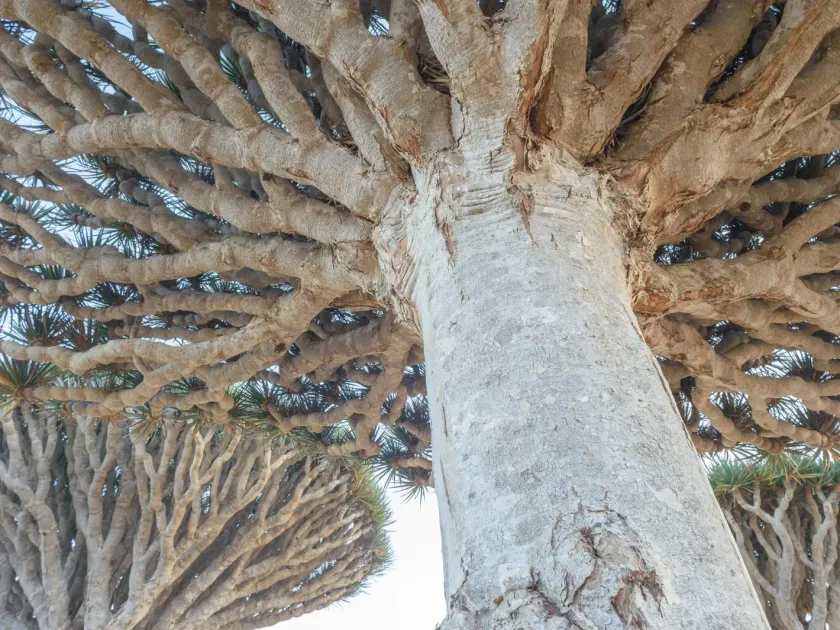
The climate requirement is unique: the tree relies heavily on seasonal mists and fog to provide essential water. The dense, umbrella-shaped canopy serves as a biological condensation trap, channeling moisture down the branches to the soil directly beneath the trunk.
Growth is exceptionally slow, which is a key survival strategy in an environment with limited resources. Young trees require shade and protection from harsh direct light, whereas mature specimens are fully adapted to intense tropical solar radiation and strong winds.
Maintaining the ecological balance of its native habitat is crucial. The tree cannot thrive in urban or greenhouse conditions easily due to its precise requirements for atmospheric moisture and drainage, making in-situ conservation the only viable strategy.
Main diseases and pests
Climate change is the most significant threat, as the reduction in seasonal fog and rainfall levels directly impacts the tree's ability to survive. Extended droughts lead to widespread die-off among adult populations, which cannot be easily replaced.
Livestock grazing, particularly by goats, poses a major risk. These animals consume young seedlings, preventing the natural regeneration of the forests. Without successful recruitment of new trees, the population structure becomes dangerously skewed towards aging individuals.
Pathogenic threats, including various wood-rotting fungi, often infiltrate the tree through open wounds left by improper resin collection techniques. These infections can compromise the structural integrity of the tree, leading to premature death.
Invasive species and land degradation due to human development further fragment the habitat. As the environment changes, the tree's inability to migrate or adapt quickly makes it extremely vulnerable to extinction in the wild.
- Climate change and drought-induced mortality
- Overgrazing by domestic animals
- Fungal infections from improper extraction
- Slow natural regeneration rates
- Habitat fragmentation and human development
Harvesting
The primary economic value of this species lies in its deep red resin, historically known as dragon's blood. Harvesting this substance has been a cultural practice for centuries, involving specific incisions in the bark to extract the sap.
Harvesting is performed during the dry season, as the quality and concentration of the resin are optimal during this period. The process requires high precision to ensure the tree's health is not compromised, as the healing rate of the bark is very slow.
The resin is prized in traditional medicine for its antiseptic and healing properties. In modern applications, it is used in high-end varnishes for wood, specifically for musical instruments, and as an ingredient in specialty cosmetics and natural dyes.
Sustainable harvesting protocols have been implemented to protect the species. Since the trees are long-lived but have slow reproduction rates, any extraction must be strictly monitored to prevent over-exploitation and ensure the long-term survival of the groves.
Research into the biochemical composition of the resin continues, revealing new medicinal potential. This ongoing interest provides an economic incentive for local communities to preserve the trees rather than clear-cutting the land for agriculture.