
Diplazium porphyrorachis
Diplazium porphyrorachis
Description
Growing requirements
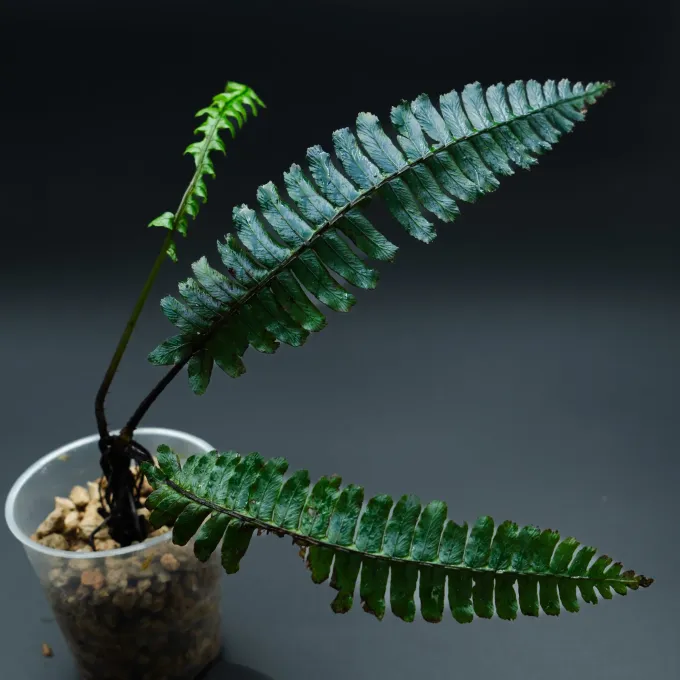
Diplazium porphyrorachis is a perennial fern species belonging to the Athyriaceae family. Originating from tropical forest ecosystems, this plant is characterized by its unique purple-tinged stipes, which provide significant ornamental value in botanical collections and shaded gardens.
The cultivation of this fern requires strict adherence to humidity and temperature guidelines. Ideally, it thrives in high humidity environments with consistent temperatures ranging between 18°C and 25°C, simulating the understory of its native tropical habitat.
Soil requirements focus on high organic content and excellent drainage. A substrate composed of peat moss, leaf mold, and perlite is recommended to ensure the roots receive adequate moisture while avoiding waterlogging, which is detrimental to the plant's health.
Light management is crucial, as Diplazium porphyrorachis is highly adapted to low-light conditions. Exposure to direct sunlight must be strictly avoided, as it causes rapid leaf scorch and degradation of the plant's vibrant structural appearance.
Proper maintenance involves regular monitoring of soil moisture. The root zone should remain consistently damp but never saturated. Using rainwater or filtered water at room temperature is preferred to prevent salt accumulation in the growing medium.
Main diseases and pests
Fungal pathogens represent the most significant threat to the health of Diplazium porphyrorachis, particularly in stagnant, humid environments. Root rot and leaf spot diseases are common, necessitating a focus on proper airflow and clean cultivation practices.
Pests such as spider mites and aphids may infest the fronds, especially during periods of low air humidity. Regular inspections and the application of horticultural oils or neem-based solutions are effective strategies for managing these common fern pests.