
Vegetable fern
Diplazium esculentum
Description
Growing requirements
Vegetable fern (Diplazium esculentum) is a perennial herbaceous fern belonging to the Athyriaceae family. Originating in tropical and subtropical Asia and Oceania, it is highly regarded as a leafy vegetable that thrives in humid, shaded environments, often found near streams and damp forest floors.
The cultivation of this crop requires a warm, humid climate with consistent moisture levels. Because it is highly sensitive to frost and extreme direct sunlight, growers should prioritize shaded cultivation sites or utilize artificial shading to protect the delicate fronds from desiccation and burning.
Optimal soil conditions include high organic matter content, excellent water retention, and a slightly acidic to neutral pH. A loose, well-draining soil structure is crucial, as the root system of the fern needs constant hydration without being subjected to prolonged waterlogging.
Agricultural management primarily focuses on irrigation and moisture retention. Mulching with organic material is a standard practice to keep the root zone cool and moist, which significantly increases the yield of tender young fronds during the active growing season.
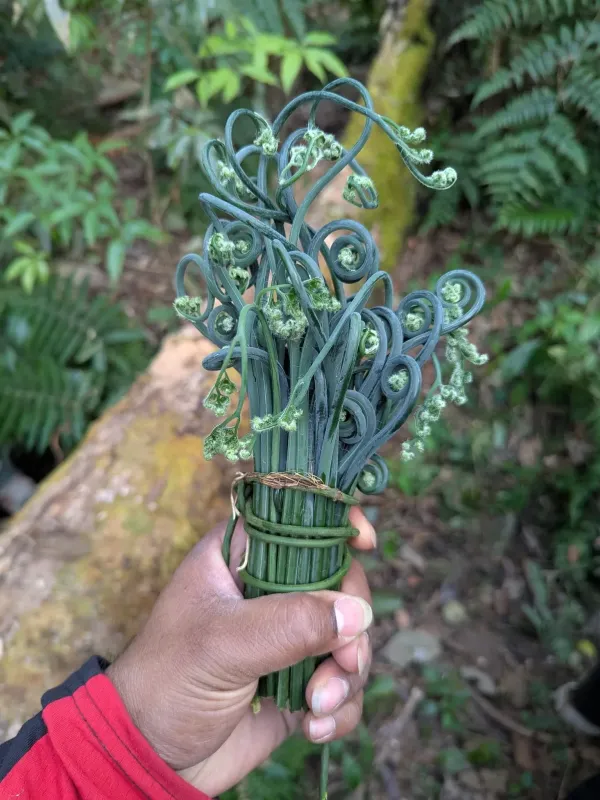
Host plant utilization is centered on harvesting the young, curled fronds (fiddleheads) before they unfurl. These are widely consumed as a nutritious vegetable in Southeast Asian cuisine, valued for their distinct texture and presence of essential micronutrients and antioxidants.
Main diseases and pests
Fungal leaf spot diseases are among the most common threats to Diplazium esculentum, especially in high-humidity cultivation settings with poor air circulation. These diseases can quickly degrade the quality of the harvested produce if left unmanaged through proper spacing.
Pest issues include leaf-eating insects such as snails, slugs, and certain species of aphids that thrive in the lush, shaded microclimate where the ferns grow. Integrated pest management using mechanical barriers or bio-rational pesticides is often recommended to maintain crop health.