
Spanish clover
Desmodium uncinatum (Jacq.) DC.
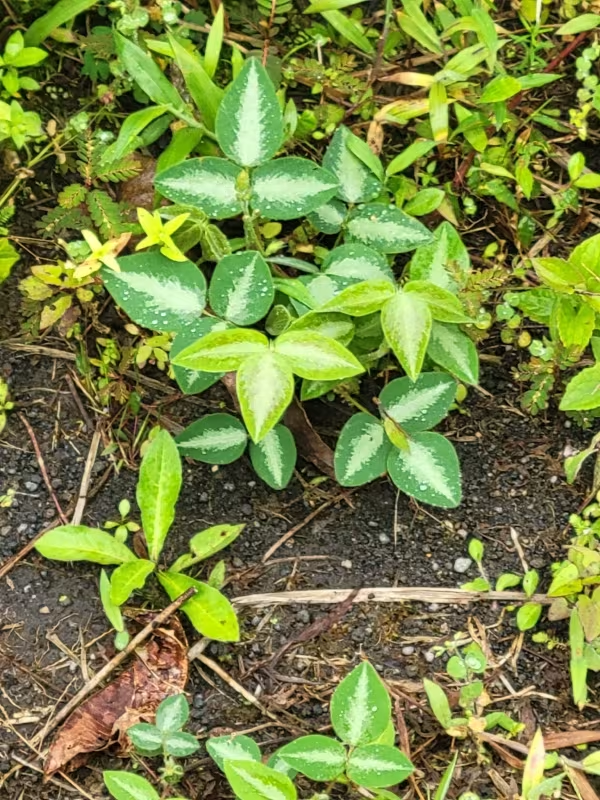
Description
Sowing dates
Desmodium uncinatum, commonly known as Spanish clover, is a perennial legume that requires warm conditions for successful establishment. Planting is typically carried out at the onset of the rainy season to ensure sufficient soil moisture for seed germination.
Seeds should be sown at a shallow depth of approximately 1–2 cm. Given that it is a legume, seed inoculation with the specific Bradyrhizobium strain is essential to ensure effective nitrogen fixation from the early stages of growth.
When used in pasture mixtures, seeding rates must be adjusted based on the vigor of companion grasses. The plant establishes relatively slowly, necessitating a weed-free environment during the first several weeks of life.
In regions with fluctuating temperatures, sowing should be delayed until the risk of late frosts has completely passed, as seedlings are highly sensitive to cold stress.
Proper seedbed preparation, including fine tilth and adequate leveling, is crucial for achieving uniform plant density and preventing early competition from faster-growing annual weeds.
Growing requirements
This species belongs to the Fabaceae family and originates from tropical regions of South America. It is widely adapted to various climates, preferring areas with moderate to high rainfall and warm temperatures throughout the growing season.
The plant thrives in fertile, well-drained soils ranging from sandy loams to clays. While it displays some drought tolerance, it performs best in soils with reliable moisture content and performs poorly in waterlogged or swampy conditions.
Desmodium uncinatum is moderately shade-tolerant, making it a viable candidate for silvopastoral systems. It prefers temperatures between 20°C and 30°C for optimal leaf production and nitrogen fixation efficiency.
Although it can tolerate slight acidity, soil pH levels should ideally be managed between 5.5 and 7.0 for the best nutrient availability. Supplemental fertilization with phosphorus is often required to sustain high productivity.
Maintenance of the crop involves monitoring soil fertility levels, as the plant's high nitrogen fixation rate can be inhibited if trace elements or phosphorus are severely deficient in the root zone.
Yield
The primary use of Desmodium uncinatum is as a high-quality forage crop for cattle and small ruminants. Its leaves are rich in proteins, providing an excellent nutritional profile that supports animal growth and milk production.
The species is highly regarded for its ability to fix atmospheric nitrogen, which enhances soil fertility and reduces the need for nitrogenous chemical fertilizers in mixed grass-legume stands.
In pastoral systems, the crop can be utilized for rotational grazing, which helps maintain the stand's longevity. It produces a dense canopy that effectively covers the ground, thus acting as a natural measure against soil erosion.
When cultivated in intensive agricultural systems, it serves as a reliable green manure or cover crop, improving the physical and chemical properties of the soil for subsequent rotations.
The economic value of this crop lies in its dual functionality: as a nutritious fodder source and as a biological tool for soil restoration in degraded agricultural lands.
Main diseases and pests
Fungal diseases are the most common threats to Desmodium uncinatum, particularly in humid and tropical environments. Diseases like anthracnose can cause significant leaf damage, reducing both yield and quality.
Insect pests, including various caterpillars and beetles, may damage the foliage or reproductive parts of the plant. Integrated pest management strategies are necessary to keep populations under control without disrupting local ecosystems.
To mitigate the risk of disease, farmers should practice rotational grazing or cutting, which prevents the build-up of moisture within the dense canopy and reduces the prevalence of fungal pathogens.
The selection of disease-resistant varieties is a key strategy for ensuring consistent performance. Regular field inspections are recommended to detect and treat pest outbreaks at the early stages.
Environmental stressors, such as extreme heat or unexpected frost, can also weaken the plant, making it more susceptible to opportunistic pathogens that would otherwise be harmless in vigorous stands.
Harvesting
Harvesting for hay should ideally occur at the onset of flowering to maximize the concentration of crude protein and digestibility. Cutting the stand at an appropriate height of 10–15 cm ensures that the plant can regrow effectively.
Drying the harvested material quickly is critical to retaining its high nutritional value. In humid climates, mechanical drying or active ventilation is often employed to prevent mold growth during storage.
Seed harvesting requires precision timing; seeds mature in pods that can shatter easily upon drying. Harvesting is typically done when the pods turn brown but before they fully open to minimize yield loss.
Proper cleaning and storage of seeds in a cool, dry environment are necessary to maintain high germination rates for future planting cycles.
Regular maintenance post-harvest, such as clearing debris and ensuring adequate field drainage, prepares the crop to recover quickly and sustain its productivity for subsequent seasons.