
Desmodium intortum
Desmodium intortum (Mill.) Urb.
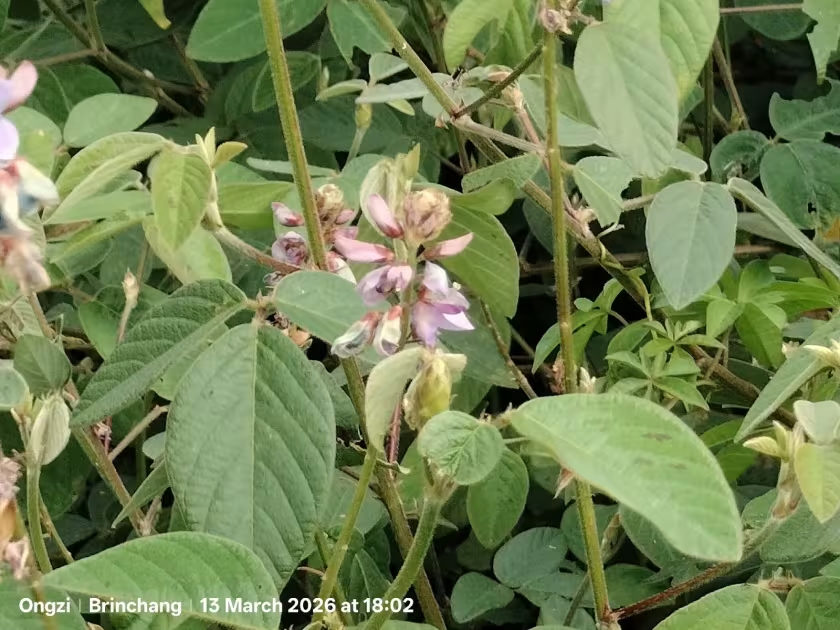
Description
Sowing dates
Sowing should be performed at the beginning of the rainy season to ensure the seeds have sufficient moisture to germinate and establish successfully.
The seeds of Desmodium intortum possess a hard seed coat, making scarification or soaking in warm water necessary to improve field emergence rates.
The recommended seeding rate varies by application but generally ranges from 2 to 5 kg per hectare when drilled in rows for pasture establishment.
Seeds must be planted at a shallow depth of 1–2 centimeters, as they are small and lack the energy reserves to emerge from deeper soil layers.
Inoculation with the correct strain of Bradyrhizobium is essential to ensure effective nitrogen fixation and vigorous growth of the legume crop.
Growing requirements
Desmodium intortum is a member of the Fabaceae family, recognized as a trailing and climbing perennial legume that thrives in humid environments.
This crop prefers tropical and subtropical climates with high annual rainfall, yet it demonstrates moderate tolerance to short periods of drought once established.
It adapts to a wide range of soil types, including acidic soils, provided they offer good drainage and are not prone to prolonged waterlogging.
The plant performs well in partial shade, making it a valuable candidate for inclusion in silvopastoral systems or under tree canopy covers.
Optimal growth occurs at temperatures between 20 and 30 degrees Celsius, and the plant is highly susceptible to frost, which limits its range in temperate zones.
Yield
As a productive forage crop, it provides high-quality biomass rich in crude protein, which significantly enhances the diet of grazing ruminants.
Yields of dry matter can range from 5 to 12 tons per hectare annually, depending on soil fertility, moisture availability, and the frequency of fertilizer application.
Phosphorus fertilization is critical for maintaining high yields, as it supports root development and the activity of nitrogen-fixing bacteria in the root nodules.
The crop is highly valued for its ability to recover rapidly after grazing or cutting, ensuring a consistent supply of green feed throughout the growing season.
In mixed pastures, it works symbiotically with grasses to improve the overall quality and nutritional profile of the forage produced.
Main diseases and pests
Anthracnose is the most significant disease affecting the foliage, particularly in areas with high humidity and limited airflow within the crop canopy.
Insect pests, including various beetles and nematodes, can damage the crop, leading to stunted growth and reduced vigor if infestations are not managed.
Waterlogging remains a major threat, as it quickly leads to root rot and can cause the entire crop stand to collapse during exceptionally wet months.
Integrated pest management strategies, such as crop rotation and selecting resistant varieties, are recommended to maintain healthy and productive stands.
Routine monitoring of the fields helps in early detection of potential outbreaks, allowing for timely intervention and preservation of the forage quality.
Harvesting
The first harvest can typically be taken 4 to 6 months after sowing, once the plant has established a robust root system and sufficient vegetative mass.
For hay production, the crop should be mowed at the early flowering stage to achieve the best balance between protein content and total biomass yield.
Grazing management must be strict to avoid overgrazing, ensuring that sufficient leaf area remains for the plant to regenerate effectively after being consumed.
Mechanical harvesting should maintain a stubble height of at least 10–15 centimeters to protect the basal buds and stimulate regrowth for the next cycle.
Post-harvest management should include irrigation if conditions are dry, which promotes a quicker transition back into the vegetative phase.