
Showy tick-trefoil
Desmodium canadense (L.) DC.
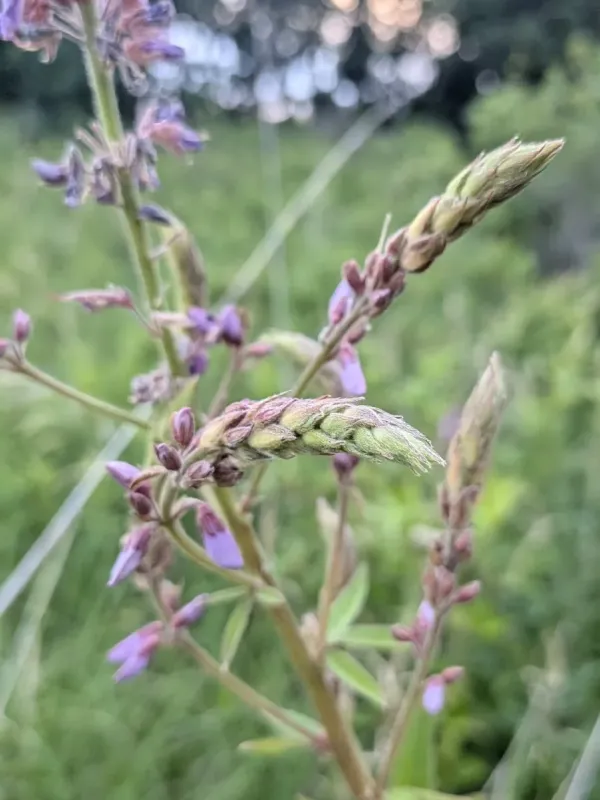
Description
Sowing dates
Sowing of Desmodium canadense should be performed in early spring as soon as the soil warms up to 10-12 degrees Celsius. Ensuring a high-quality seedbed is essential, as the seeds are quite small and require shallow burial in the soil.
To improve germination, seeds should undergo a scarification process to break the hard seed coat and promote faster sprouting. The seeding rate depends on the method used, typically ranging from 10 to 12 kilograms per hectare.
In regions with temperate climates, dormant autumn or winter sowing is possible, allowing seeds to undergo natural stratification. This helps ensure more uniform emergence at the start of the following growing season.
Firming the soil immediately after sowing is a critical step to ensure good seed-to-soil contact. This is essential for maintaining moisture in the topsoil, which is necessary for the embryo to germinate successfully.
During the first weeks after emergence, the crop grows slowly, making weed control crucial. It is recommended to use mechanical weeding methods in the inter-rows to avoid damaging the young desmodium plants.
Growing requirements
Showy tick-trefoil is a perennial herbaceous plant in the legume family and is a valuable component of North American ecosystems. It is known for its high ecological plasticity and its ability to fix atmospheric nitrogen in the soil.
The crop prefers well-lit areas with moderately moist, fertile loamy soils. The plant is capable of tolerating temporary soil saturation, making it a promising candidate for cultivation in lowland areas.
The optimal soil pH range for successful cultivation is between 6.0 and 7.0. In soils that are too acidic or too alkaline, the green mass productivity decreases significantly.
The plant exhibits high winter hardiness, allowing for successful cultivation in regions with severe winters. It is also resistant to spring frosts, which distinguishes it from many other heat-loving legume species.
Due to its well-developed root system, Desmodium canadense shows moderate drought tolerance. However, for maximum green mass and seed yields, regular irrigation during dry summer periods is highly recommended.
Main diseases and pests
One of the most common issues during cultivation is powdery mildew infection, especially in periods of high air humidity. This disease manifests as a white coating on the leaves, which reduces the quality of the forage.
Root rot may occur during prolonged water stagnation in the field or soil compaction. For prevention, it is recommended to practice crop rotation and improve the drainage properties of the soil.
Among pests, weevils and various species of aphids pose the greatest threat to the crop, damaging young shoots and inflorescences. In the event of an outbreak, the application of insecticides according to regulations is necessary.
Anthracnose can affect the stems and leaves of desmodium, causing the formation of dark spots and premature drying of the foliage. Timely removal of infected plants helps prevent the spread of the infection.
Nematodes can also negatively affect root system development, often leading to the suppression of the entire plant. Using healthy seed material and proper crop rotation are the primary control measures.
Harvesting
The primary use of the crop is for hay and green fodder, which are rich in protein. The maximum nutritional value is achieved during the flowering phase, so harvesting should begin at this time.
To ensure high-quality hay, the mowed mass must be dried quickly to preserve the leaves, as they contain the majority of the nutrients. Over-drying often leads to a significant loss of leaf material.
Green mass yields, with proper care, can reach 30-40 tons per hectare from one or two cuts depending on moisture availability. The crop regenerates well after mowing, allowing for intensive utilization regimes.
Collecting desmodium seeds requires care, as the pods (legumes) are prone to shattering upon maturity. Harvesting of seed crops is carried out by direct or two-stage combining when the majority of the pods turn brown.
After harvesting, seeds must be cleaned and dried immediately to a moisture content of no more than 12-14 percent. Seeds should be stored in a cool, dry place to maintain high germination rates for the following season.