
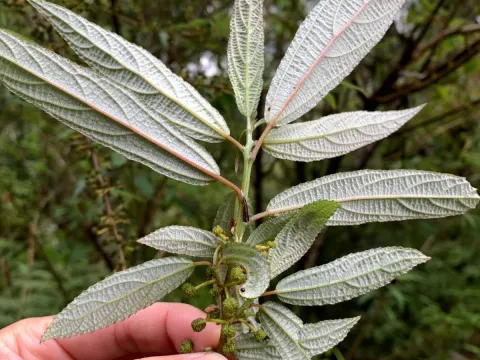
Debregeasia
Debregeasia
Propagation of Debregeasia is primarily achieved through seeds or stem cuttings. Seed germination often requires a period of cold stratification to break dormancy and ensure a high percentage of successful sprouts.
What the section contains

Debregeasia
Sowing should take place in a well-draining soil medium within a protected environment, such as a greenhouse, during early spring. A temperature range of 20-25 degrees Celsius is optimal for consistent seedling emergence.
Vegetative propagation involves taking semi-hardwood cuttings during the summer months. These cuttings require high humidity levels and stable temperatures to promote successful rooting before being hardened off.
Seedlings or rooted cuttings are transplanted into open fields only once the danger of late frost has passed. Early protection, such as shading or mulching, is recommended to help the young plants establish their root systems.
A proper planting layout must be maintained to ensure sufficient airflow between plants, which is vital for reducing humidity levels around the foliage and preventing early-stage developmental issues.
As a member of the Urticaceae family, Debregeasia thrives in warm, humid subtropical or tropical climates. While it requires significant sunlight, young specimens benefit from partial shade to prevent leaf scorch during peak solar intensity.
Consistent moisture is crucial for the optimal development of the plant. Periods of prolonged drought can significantly restrict growth and reduce the quality of the bast fibers produced in the stems.
The ideal soil for this crop is fertile, loose, and well-drained with a slightly acidic to neutral pH. Waterlogging must be strictly avoided, as the root system is highly susceptible to rot when oxygen levels in the soil are low.
Regular fertilization with organic compost or balanced NPK fertilizers is necessary throughout the growing season to support the production of vegetative biomass, which is the primary objective for fiber production.
Good agricultural practice also includes routine weeding and cultivation of the soil surface. Minimizing competition from weeds ensures that water and nutrients are focused entirely on the Debregeasia plants.
The economic value of Debregeasia is primarily derived from its high-quality bast fiber, known for durability. Yield of raw biomass is contingent upon plant density and effective irrigation management during the growing season.
Mature plants develop thick, vigorous stems that are suitable for harvesting by the end of the second year. Fiber content in the stems usually peaks at this stage, providing the best return for processing efforts.
Specific varieties, such as those cultivated for fruit, can yield several kilograms of berries per bush. The yield of fruit depends heavily on the age of the plant and the availability of nutrients during the flowering phase.
Fruit harvesting requires delicate handling to prevent bruising, as the berries are soft and have a short shelf life. Immediate post-harvest cooling or processing is recommended to preserve quality.
Annual pruning practices significantly boost yields by encouraging the growth of strong replacement shoots. Maintaining a vigorous, young canopy through regular pruning ensures a high-yielding plantation for many years.
Fungal diseases, including leaf spot and various blights, are the most common threats to Debregeasia, particularly in poorly ventilated or excessively damp growing environments. These pathogens can severely weaken the plant.
Pests such as aphids and spider mites are frequent invaders, especially during hot and dry weather conditions. They suck sap from young leaves, causing curling, distortion, and a overall decline in plant vigor.
Integrated pest management, including the use of beneficial insects and biological fungicides, is preferred over synthetic chemicals to maintain the quality of the fiber and fruit for future consumption.
Proactive prevention involves removing fallen leaves and pruning away infected branches promptly. This hygiene practice reduces the likelihood of fungal spores overwintering and spreading in the next season.
Nutrient monitoring is also vital, as chlorosis can often be mistaken for pest damage. Ensuring a balanced uptake of micronutrients helps the plant maintain its natural resistance to environmental stressors and infestations.
The harvest of fiber crops occurs at the end of the active growth cycle. The stems are cut near the base, which encourages new, vigorous growth in the subsequent spring and helps maintain the health of the rootstock.
Raw stems are processed through retting or mechanical extraction to separate the inner bast fiber from the woody core. Precise control over the retting process is necessary to achieve the desired fiber fineness and strength.
Fruit harvesting is performed as berries reach full ripeness, identifiable by their characteristic color shift. Harvest is best conducted during the early morning hours when temperatures are at their lowest.
Post-harvest preservation involves either quick-freezing the berries or drying them to maintain their nutritional profile and taste. These methods are essential for extending the shelf life of the harvested fruit.
The final phase of the season involves sanitizing the field by removing debris and damaged plant material. This prepares the crop for dormancy and sets the stage for rapid regrowth in the following cycle.