
Davallia solida
Davallia solida
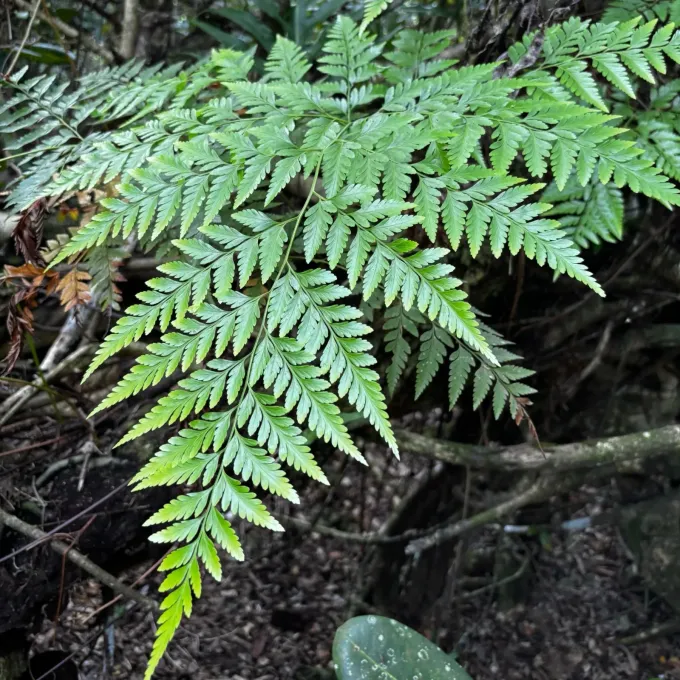
Description
Growing requirements
Davallia solida is a remarkable epiphytic fern belonging to the Davalliaceae family. Native to tropical regions across Southeast Asia, Malaysia, and Australia, it naturally grows on tree trunks and rocky crevices, utilizing these surfaces for support in its humid native environment.
The most distinctive botanical feature of this fern is its creeping, scaly rhizomes that often spill over the sides of the container, earning it the common nickname rabbit's foot fern. The fronds are leathery, triangular in shape, and possess a vibrant, glossy green color that makes it a popular ornamental choice.
Cultivation requires specific environmental conditions, primarily high humidity and stable temperatures between 18°C and 24°C. Unlike many other ferns, it appreciates good airflow but must be protected from drafts, which can cause rapid desiccation of the delicate foliage.
The substrate must be exceptionally well-draining, typically consisting of a mix of bark, perlite, and sphagnum moss. It is crucial to maintain moisture in the root zone without creating waterlogged conditions, as the rhizomes are highly susceptible to rot if they remain damp for too long.
Bright, filtered light is essential for optimal growth. While it tolerates lower light levels, excessive shade may cause the fronds to become leggy and lose their deep green pigmentation, whereas direct sunlight will lead to scorched leaf tissues and poor overall health.
Main diseases and pests
Spider mites are the most frequent pests associated with Davallia solida, thriving in environments with low humidity. To prevent infestations, it is recommended to mist the plant regularly and keep the environment clean, treating early signs of webbing with insecticidal soap.
Mealybugs are another common threat, often sheltering deep within the thick, scaly rhizomes where they are difficult to reach. Systematic inspection of the rhizome structure is necessary to catch and remove these pests before they spread throughout the plant's surface.
Root rot, caused by overwatering or poor drainage, is the primary reason for plant failure in this species. Symptoms include blackening of the rhizomes and sudden collapse of the fronds, necessitating immediate repotting into fresh, airy substrate and strict regulation of watering intervals.
Fungal leaf spot diseases can occur if water remains on the fronds for prolonged periods in cooler temperatures. Ensuring proper air circulation and avoiding overhead watering are key preventive measures for maintaining healthy and aesthetically pleasing foliage.
Scale insects can occasionally infest the stems, extracting nutrients and weakening the fern. If detected, manually removing them with a cotton swab dipped in alcohol or applying a horticultural oil can help manage the population without damaging the sensitive rhizomatous growth.