
Davallia fejeensis
Davallia fejeensis
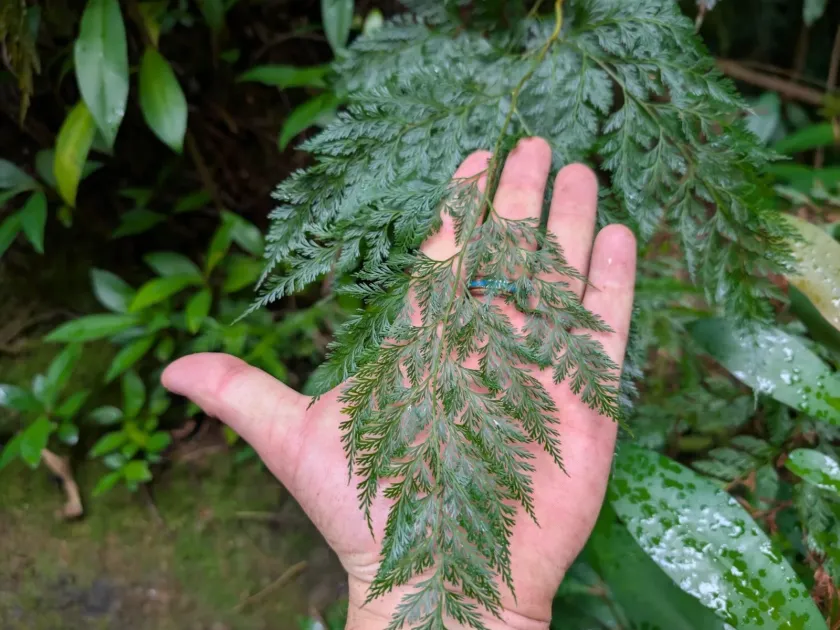
Description
Growing requirements
Davallia fejeensis is a member of the Davalliaceae family, originating from the tropical forests of Fiji. As an epiphytic fern, it typically grows on trees or rocks in its natural habitat, which influences its specific agricultural requirements in home cultivation.
The plant is prized for its decorative, creeping rhizomes, which are covered in fuzzy, brownish scales resembling rabbit paws. These rhizomes grow over the edge of the pot, making the plant an excellent choice for hanging baskets in indoor or conservatory settings.
This fern requires bright, indirect light to thrive; exposure to direct sunlight will scorch the delicate, finely-divided fronds. The ideal temperature range for stable growth is between 20°C and 24°C, and it should never be kept in areas where temperatures drop below 15°C.
Cultivation requires a highly porous, well-draining soil mix rich in organic matter. A blend consisting of peat, leaf mold, and sphagnum moss is recommended to provide the necessary air circulation for the roots and rhizomes, as they are prone to rotting if the soil is too dense.
Consistent humidity is crucial for the health of Davallia fejeensis. Regular misting or the use of a humidity tray is necessary, especially during the winter months when indoor heating significantly dries out the air. Watering should keep the substrate moist but not waterlogged.
Main diseases and pests
The primary pests affecting this species are spider mites and scale insects, which often thrive in dry, warm indoor environments. Monitoring the undersides of the fronds is essential, and any infestations should be treated with insecticidal soaps or horticultural oils promptly.
Fungal issues related to root rot are the most common health threats, usually triggered by poor drainage or overwatering. Proper management includes using a container with large drainage holes and ensuring the medium is refreshed if compaction occurs over time.