
Davallia griffithiana
Davallia griffithiana
Description
Growing requirements
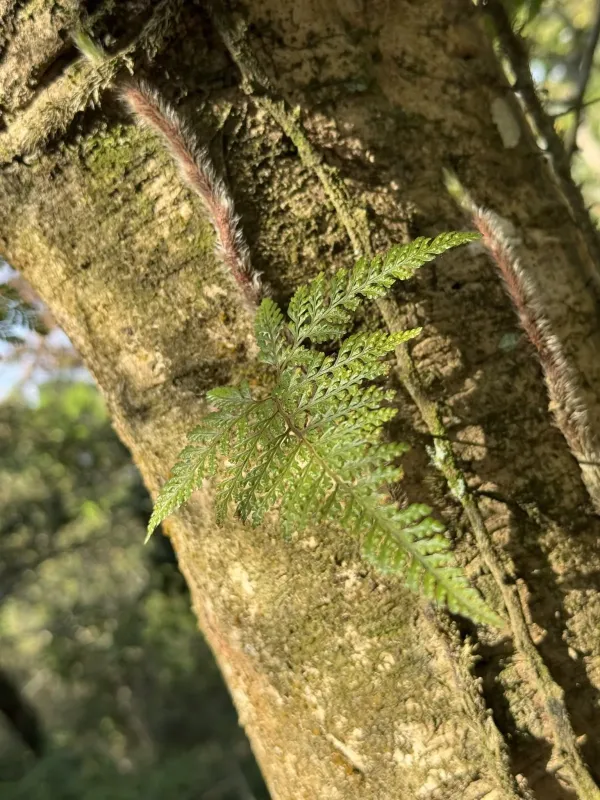
Davallia griffithiana is a distinctive epiphytic fern belonging to the Davalliaceae family. Native to the tropical regions of Southeast Asia, this species is well-known for its creeping rhizomes covered in silver-grey scales, which allow it to thrive in tree crevices and on rocky slopes.
The culture requires bright, indirect light to flourish. Direct exposure to midday sun can scorch the delicate fronds, while insufficient light leads to sparse growth and loss of the plant's characteristic vibrant green color.
Environmental conditions must mimic the tropical forest floor. An ambient temperature range of 18°C to 24°C is ideal for year-round growth. It is essential to maintain high relative humidity levels, ideally above 60%, to prevent the tips of the fronds from browning.
Soil requirements focus on excellent aeration and drainage. A mixture of sphagnum moss, orchid bark, perlite, and a small portion of peat moss is recommended to provide the necessary structure while retaining enough moisture for the roots.
Watering management is critical for this species. The substrate should be kept consistently moist but never waterlogged. Using tepid, chlorine-free water helps keep the roots healthy and prevents the mineral buildup that sensitive ferns often suffer from.
Main diseases and pests
Common pests affecting Davallia griffithiana include scale insects and spider mites. Regular inspection of the rhizomes and the underside of the fronds is necessary to catch infestations early before they cause significant damage.
Root rot, caused by overwatering or poor drainage, is the primary physiological threat. If the rhizomes become soft or mushy, the plant must be repotted into fresh, dry substrate and the affected parts should be pruned away immediately.
Fungal leaf spot can occur if the foliage remains wet for extended periods in environments with poor air circulation. Improving airflow around the plant is the most effective way to prevent these types of infections.
Dry air exposure often manifests as brittle, brown foliage. During the winter months, when indoor heating systems lower the humidity, using a humidifier or a pebble tray is necessary for plant longevity.
Viral infections are rare but can lead to stunted growth. To maintain a healthy specimen, always sanitize pruning tools with alcohol between uses and isolate new plants before introducing them to the existing collection.