
Davallia parvula
Davallia parvula
Description
Growing requirements
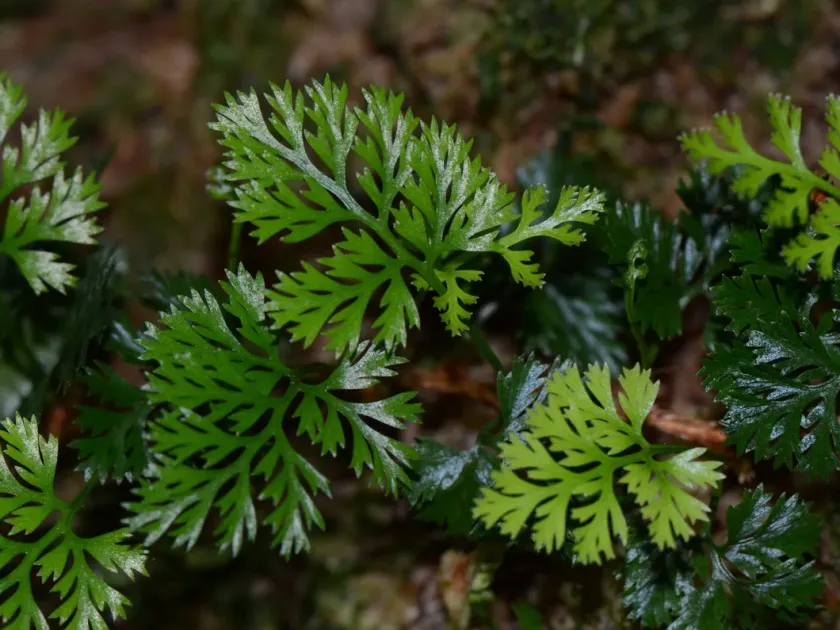
Davallia parvula is a compact epiphytic fern belonging to the Davalliaceae family. Native to the tropical regions of Southeast Asia, it is highly valued for its dense, finely divided fronds and creeping, furry rhizomes.
Botanically, this species is well-adapted to canopy life. Its rhizomes are designed to absorb moisture and nutrients from the air and decaying debris on tree branches, which dictates the specific requirements for its cultivation.
Regarding climate, the plant thrives in tropical conditions with temperatures ranging from 18 to 24 degrees Celsius. It requires high ambient humidity, making it an excellent candidate for terrariums or high-humidity greenhouse environments.
Soil requirements are critical: the growing medium must be highly porous and well-drained. A mix consisting of orchid bark, perlite, and sphagnum moss is ideal to prevent root suffocation while retaining necessary moisture.
Maintenance involves frequent, light watering using soft, chlorine-free water. The rhizomes should never be buried deep in the soil, as they require good ventilation to stay healthy and avoid rot.
Main diseases and pests
Pests commonly associated with Davallia parvula include scale insects and mealybugs. These sap-sucking pests can severely weaken the plant by feeding on the fronds and the rhizome structure.
Fungal infections are often a direct result of improper watering practices. Over-saturation of the substrate promotes rot in the root system, which is frequently irreversible once the rhizome turns soft and black.
Spider mites are a typical problem when the plant is kept in low-humidity environments. They cause stippling and yellowing of the fronds, leading to a loss of vigor and potential plant death if not treated.
Poor ventilation can lead to outbreaks of powdery mildew or other surface fungi, especially in closed terrarium systems. Ensuring fresh air circulation is essential for the long-term health of the fern.
Integrated pest management should focus on maintaining optimal environmental conditions first. Chemical treatments should be used sparingly and only with formulations specifically tested as safe for delicate fern species.