
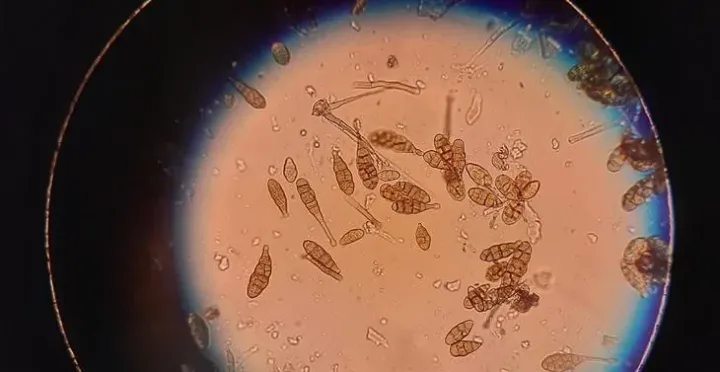
Description
Symptoms
The hallmark of this infection is the development of a velvet-like growth that starts as olive-colored and eventually darkens to a deep blackish-green.
Symptoms often appear on mature or stressed leaves, manifesting as irregular patches that disrupt the normal appearance and function of the plant tissue.
On hosts like the date palm, the mold forms dark spots on the fronds and leaf bases, eventually causing those sections to become necrotic and dry out.
In addition to surface growth, the fungus induces systemic weakening, leading to leaf chlorosis, premature wilting, and overall stunted growth of the plant.
Close inspection of the infected area often reveals a dusty layer of spores, which, when disturbed, can easily spread to adjacent healthy parts of the plant.
Pathogen
The causative agent of dark olive mold is the ascomycete fungus Mycosphaerella tassiana, which is widely recognized for its anamorphic state, Cladosporium herbarum.
This fungus acts primarily as a saprophyte, surviving on dead organic matter, but it frequently shifts to a parasitic lifestyle when environmental conditions permit.
The organism is highly resilient, capable of producing millions of spores that are easily dispersed by wind, rain splashes, and contact with contaminated gardening tools.
Its biological cycle is well-adapted to varied climates, allowing it to remain dormant in soil or plant debris throughout the winter months.
The taxonomy of this species is complex, as it belongs to a group of ubiquitous fungi that thrive on a wide array of plant hosts across the globe.
Conditions for development
The proliferation of Mycosphaerella tassiana is strictly linked to high relative humidity levels, usually exceeding 80 percent in stagnant air environments.
Poor ventilation is the primary driver for outbreaks, particularly in indoor greenhouses or densely planted gardens where moisture remains on the foliage for long periods.
Moderate temperatures ranging from 20 to 25 degrees Celsius facilitate the rapid germination and colonization cycle of the fungal spores.
Mechanical stress, such as pruning wounds or insect-induced lesions, creates direct entry points for the pathogen into the internal plant tissues.
Excessive nitrogen fertilization can sometimes contribute to overly succulent growth, which is significantly more susceptible to colonization by this mold.
Why it matters
The primary damage caused by dark olive mold is the destruction of photosynthetic tissue, which reduces the plant’s energy production capacity.
In ornamental plants like the date palm, the aesthetic value is destroyed, rendering them unfit for landscape use or commercial display purposes.
The fungus can produce toxins that negatively affect plant metabolism, leading to premature leaf senescence and a decline in overall plant vigor.
If left unmanaged, the infection can become widespread, potentially killing young or weakened specimens and creating a reservoir of inoculum for future seasons.
Economic loss is often significant in nurseries and greenhouse operations, where the disease requires costly treatment and management strategies.
Protection
Management begins with stringent sanitation practices, such as removing and destroying all infected plant parts to minimize the source of future spores.
Improving airflow through proper plant spacing and maintaining low humidity in closed environments are critical preventative measures against the fungus.
Fungicidal treatments, including protective copper-based sprays or systemic triazoles, are effective when applied at the first signs of mold development.
- Regular pruning of dead or diseased leaves;
- Maintaining optimal irrigation to avoid waterlogging the soil;
- Disinfecting pruning shears and other tools with alcohol;
- Implementing biological controls to manage fungal population density.
Continuous monitoring of the crop is essential to ensure that any initial outbreaks are contained before they escalate into an uncontrolled epidemic.
Pathogens and affected parts
Affects crops · 1
Discussion
No discussions yet — be the first.