
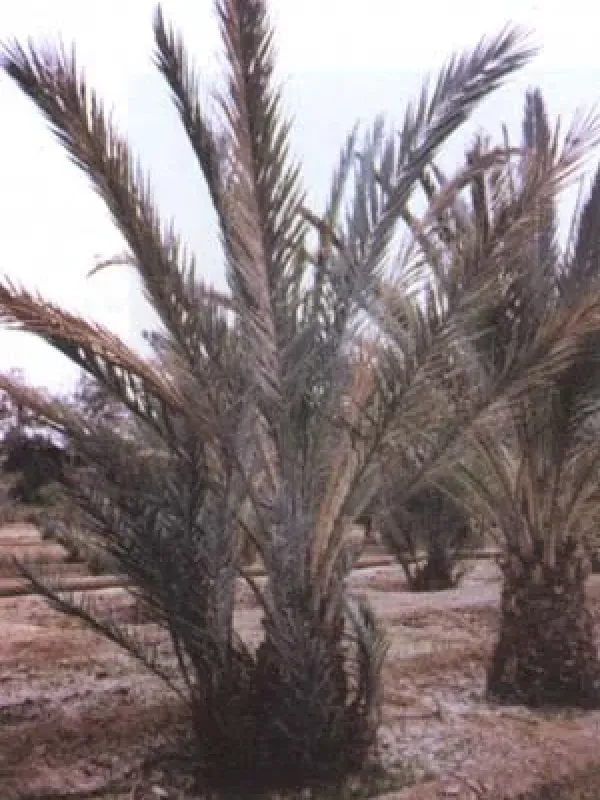
Description
Symptoms
Early symptoms of the disease include the loss of turgor in the palm fronds, followed by a gradual yellowing and drying process starting from the lower levels of the canopy.
Below the surface, the roots show characteristic signs of decay. Infected roots become soft, watery, and eventually shift in color to dark brown or black.
Necrotic lesions may appear at the base of the trunk or the root collar, particularly in humid or waterlogged conditions, which is a hallmark of an advanced infection.
As the root system disintegrates, the palm loses its ability to absorb essential nutrients, which leads to stunted growth and a general decline in the tree's vitality.
In severe cases, the structural integrity of the root system is completely destroyed, often resulting in the palm tilting or falling over due to a loss of anchoring.
Pathogen
Omphalia root rot is caused by fungi belonging to the genus Omphalia, with Omphalia pigmentata being the most recognized species associated with this condition in various woody plants.
The pathogen is a soil-borne fungus that lives primarily in the rhizosphere, utilizing organic matter or infecting living root tissues when the tree's health is compromised.
The fungus produces mycelium that penetrates the root system, causing degradation of the vascular tissues and interfering with the tree's water and nutrient uptake capabilities.
This biological process is facilitated by extracellular enzymes secreted by the fungus, which break down plant cell walls and lead to tissue necrosis.
Transmission of the disease occurs through contaminated soil, irrigation water, and the movement of infected plant material or tools across different parts of the orchard.
Conditions for development
The disease thrives in environments characterized by poor drainage and excessive soil moisture. Waterlogged soil creates an ideal anaerobic environment for the fungus to spread.
Optimal temperatures for the growth and colonization of Omphalia species are typically within the warm range, common in regions where date palms are cultivated.
Poor agricultural practices, such as over-irrigation and the failure to provide proper aeration for the root system, are major contributing factors to the onset of the infection.
Trees stressed by drought, nutrient deficiencies, or other environmental factors show higher susceptibility to invasion by the fungus.
The presence of decaying organic matter or previously infected root remnants in the soil provides a reservoir for the pathogen, allowing it to survive for extended periods.
Why it matters
Omphalia root rot causes severe damage to date palm plantations, leading to significant economic losses due to the death of mature, high-yielding trees.
Productivity is severely impacted as affected palms struggle to produce high-quality fruit, often resulting in premature fruit drop or poorly developed dates.
The systemic nature of the infection means that once a tree is heavily affected, recovery is unlikely, necessitating the removal of the tree and soil disinfection.
The fungus can spread between neighboring trees through root contact, turning a localized infection into a major plantation crisis if not managed properly.
The cumulative effect of the disease reduces the total lifespan of the orchard and requires expensive and labor-intensive measures to rehabilitate the affected soil.
Protection
Preventive management is the most effective approach. Ensuring adequate soil drainage and preventing water accumulation around the palm base is critical to inhibit the fungus.
Planting only certified, disease-free nursery stock is essential to prevent the introduction of Omphalia into new fields.
Upon detection, infected trees must be removed immediately, including the root ball, and destroyed to minimize the risk of spores spreading to healthy plants.
Application of appropriate fungicides and biological control agents that promote healthy rhizosphere microflora can help suppress the pathogen's activity.
Regular inspections and balanced fertilization programs help keep the trees vigorous, improving their natural ability to resist fungal infections.
Pathogens and affected parts
Affects crops · 1
Discussion
No discussions yet — be the first.