
Canary Island date palm
Phoenix canariensis hort. ex Chabaud
Description
Growing requirements
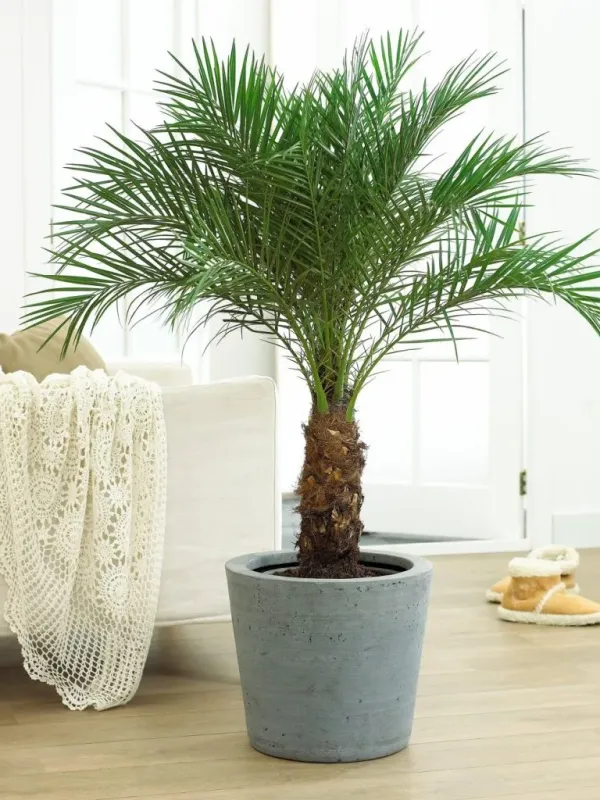
The Canary Island date palm (Phoenix canariensis) is a member of the Arecaceae family. Native to the Canary Islands, this robust palm is highly valued for its striking, feather-like fronds and a single, thick, columnar trunk.
The culture thrives in full sun and is adapted to Mediterranean-like climates. While it can withstand temperatures as low as -6°C to -8°C once mature, it generally prefers environments without severe frost or extreme temperature fluctuations.
Regarding soil, Phoenix canariensis requires deep, well-drained medium. In agricultural settings, it is crucial to ensure that the site does not have high water tables or heavy clay, which can cause root asphyxiation and eventual plant decline.
Agricultural practices involve a consistent irrigation schedule during the first years of growth to establish a strong root system. Once established, the palm shows remarkable drought tolerance, though supplemental feeding with micronutrients is essential for maintaining vibrant foliage.
Economically and aesthetically, it is widely used as a key element in subtropical landscaping. It serves as a focal point in public parks and residential gardens due to its majestic appearance and long lifespan under proper maintenance conditions.
Main diseases and pests
The red palm weevil (Rhynchophorus ferrugineus) remains the most devastating pest. The larvae burrow into the palm's crown and trunk, often resulting in the complete collapse of the structure before symptoms become visible.
Scale insects and spider mites are frequent invaders of the foliage, especially in environments with poor air circulation, causing chlorosis and premature browning of the leaves.
Fungal diseases, including Fusarium wilt, are common in soils with poor drainage. The pathogen attacks the vascular system, restricting the movement of water and nutrients throughout the fronds.
Pink rot, caused by Gliocladium vermoeseni, often targets wounded or stressed palms, leading to necrotic spots and the oozing of a brownish gum from the leaf bases.
Integrated Pest Management (IPM) is recommended, focusing on the use of pheromone traps for weevils and systemic fungicides as a preventive measure during the rainy season or periods of high humidity.