
Dalbergia sissoo
Dalbergia sissoo Roxb. ex DC.
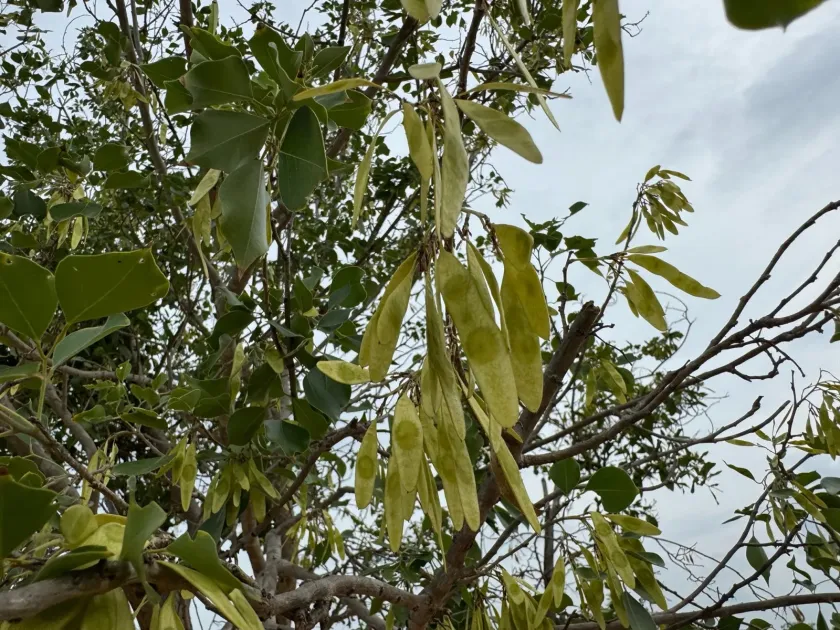
Description
Sowing dates
Dalbergia sissoo is typically propagated through seeds or root cuttings. Seeds should be sown in nursery beds or containers just before the monsoon season to maximize germination rates.
For better success, seeds should be soaked in water for 24 to 48 hours prior to sowing to break dormancy and ensure uniform seedling emergence across the nursery bed.
Seedlings are ready for transplanting when they reach a height of 30 to 50 centimeters. The planting density usually follows a grid of 2x2 or 3x3 meters to balance growth space.
Young plantations require intensive weeding during the first few years to prevent competition with grasses and shrubs, which can significantly stunt the growth of young saplings.
Root suckers can also be used for natural regeneration, which is a common practice in agroforestry systems to restore forest patches without manual planting.
Growing requirements
Belonging to the Fabaceae family, Dalbergia sissoo is a nitrogen-fixing tree that significantly contributes to soil fertility improvement in degraded landscapes.
This species thrives in tropical and subtropical climates, preferring well-drained alluvial soils along river banks but showing high adaptability to various soil textures.
The tree requires full sunlight for optimal photosynthesis and growth. It is highly resistant to drought once established, though it responds well to supplemental irrigation in early years.
Temperature range for active development is between 20°C and 35°C. The species is relatively hardy and can tolerate minor frost episodes in its adult stage.
Sustainable agroforestry management involves periodic pruning to facilitate timber quality and provide biomass for soil mulching, enhancing overall land productivity.
Yield
The primary yield of Dalbergia sissoo is its high-quality timber, renowned for being hard, durable, and resistant to decay, making it highly prized for cabinetry.
Under optimal management, trees reach commercial maturity in 15 to 20 years. The wood is widely used for high-end furniture, doors, and decorative construction elements.
Besides timber, the tree provides protein-rich foliage that serves as fodder for livestock, adding economic value to the plantation during the growth years.
The species also contributes to ecological yield by preventing soil erosion, particularly in flood-prone riverine areas, and by fixing atmospheric nitrogen into the soil.
Harvesting is usually done through clear-cutting or selective harvesting based on the management goals of the forest stand and local timber market demands.
Main diseases and pests
The most devastating disease affecting Dalbergia sissoo is the Fusarium wilt, caused by Fusarium oxysporum, which attacks the root system and leads to rapid wilting.
Leaf-eating insects, such as the larvae of Plecoptera reflexa, can cause significant defoliation, particularly in young plants, affecting their overall photosynthetic capacity.
Root rot caused by poor soil drainage remains a major risk factor, particularly in waterlogged conditions that weaken the tree's immunity against secondary pathogens.
Integrated Pest Management (IPM) practices, including the selection of resistant genotypes and maintaining proper orchard hygiene, are essential for large-scale operations.
Early detection of disease outbreaks and the removal of infected trees are critical steps in preventing the spread of fungal pathogens throughout the entire plantation.