
Dalbergia latifolia
Dalbergia latifolia Roxb.
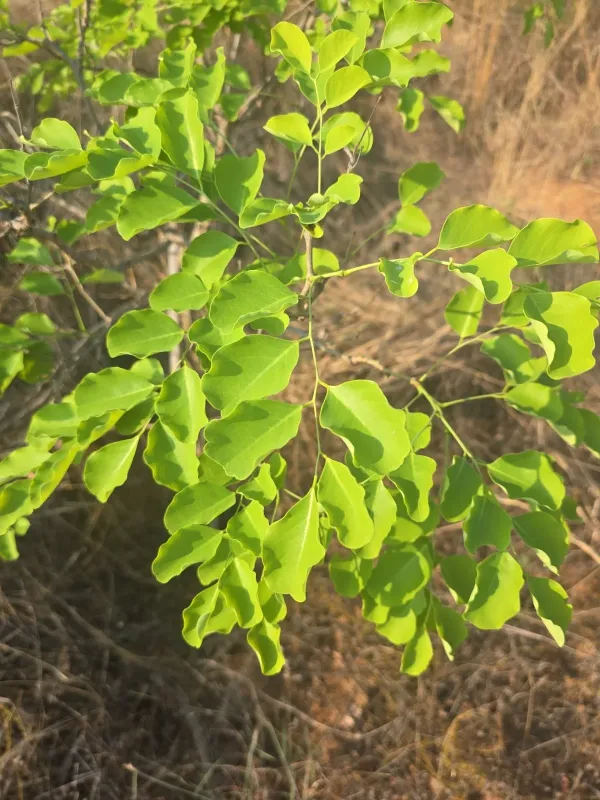
Description
Sowing dates
Propagation of Dalbergia latifolia is primarily achieved through seeds sown in nurseries. The optimal time for planting is the beginning of the rainy season, which provides the necessary humidity for effective germination and rapid initial growth of seedlings in the soil.
Seeds require pre-treatment to ensure success; soaking them in warm water for 24 hours softens the hard outer coat and significantly boosts germination rates. Once seedlings are established, they are transplanted into containers where they are raised until reaching a size of 40–50 cm.
Transplanting to the permanent site requires careful spacing to allow for the development of a strong root system and a spreading crown. Typical planting densities range from 3x3 to 4x4 meters, ensuring that each tree has sufficient space to grow straight and healthy.
Young plantations require intensive maintenance during the first three years, including weeding and soil aeration around the root zone. This minimizes competition for water and nutrients, which is crucial for the survival and long-term vitality of the saplings.
Successful establishment depends on consistent moisture levels during the early growth phase. In managed forest systems, farmers monitor the saplings to ensure they are not shaded out by invasive weeds or fast-growing secondary vegetation.
Growing requirements
Dalbergia latifolia is a deciduous tree species belonging to the Fabaceae family, native to tropical regions. It thrives in monsoon climates characterized by a distinct dry season, which is essential for the slow development of its dense, high-quality heartwood.
The tree prefers deep, fertile, and well-drained alluvial soils. It shows a strong aversion to waterlogged conditions, which can lead to root decay and significant growth stagnation, therefore proper landscape drainage is a prerequisite for any commercial plantation.
Light intensity is a critical growth factor; the species is highly light-demanding. Any excessive shading during the formative years results in poor crown development and reduced trunk quality, which is why open-field silviculture is preferred over under-canopy planting.
The ideal temperature range for Dalbergia latifolia lies between +20°C and +35°C. The species is highly sensitive to frost and does not tolerate freezing temperatures, effectively limiting its commercial cultivation to tropical and subtropical climates.
As a legume, it has the biological capability to fix atmospheric nitrogen through symbiosis with root bacteria. This trait makes it an excellent choice for agroforestry projects, as it can improve soil fertility while growing on relatively nutrient-poor land.
Yield
The primary economic output of Dalbergia latifolia is its premium-quality timber, commonly known as Indian rosewood. The harvesting cycle is long, typically spanning 40 to 60 years, reflecting the slow growth rate that contributes to the wood's density and unique grain patterns.
The timber is highly valued in the furniture and musical instrument industries for its rich brown color, durability, and resistance to pests and decay. Its stability and acoustic properties make it a global gold standard for guitar back and sides, as well as high-end cabinetry.
To maximize yields of high-grade timber, forest managers implement pruning regimes to prevent knot formation and ensure a straight bole. Regularly removing lower branches allows the tree to focus energy on producing clear, uniform wood, which fetches a significantly higher market price.
Economic profitability is tied to careful thinning processes at the 15-year and 30-year marks. By removing competing stems, the most promising trees receive more resources, which directly translates into a larger diameter and better wood density at the time of final harvest.
Despite the long-term investment horizon, demand for sustainably sourced rosewood continues to grow, ensuring that well-managed plantations remain a highly lucrative component of long-term forestry portfolios.
Main diseases and pests
Dalbergia latifolia plantations are susceptible to various fungal pathogens, particularly leaf spot diseases that thrive in high-humidity tropical conditions. These infections can significantly reduce the photosynthetic capacity of the foliage, leading to weakened growth.
Insect pests, such as wood-boring beetles and defoliators, represent a major threat. Borers specifically damage the cambium and inner wood, which degrades the timber quality and creates entry points for secondary infections, often resulting in significant economic losses.
Root rot caused by waterlogging is a primary killer of juvenile trees. Maintaining proper drainage and ensuring that soil does not become saturated during the peak rainy season is the most effective cultural method for preventing these subterranean pathogen outbreaks.
Integrated Pest Management (IPM) is essential for sustainable production. This includes monitoring for early signs of infestation, using biological control agents, and conducting timely thinning to improve air circulation within the plantation, which discourages the spread of moisture-loving fungi.
- Fungal leaf spots
- Wood-boring insect larvae
- Root rot pathogens
- Rodent damage to young bark
- Competition from invasive weeds