
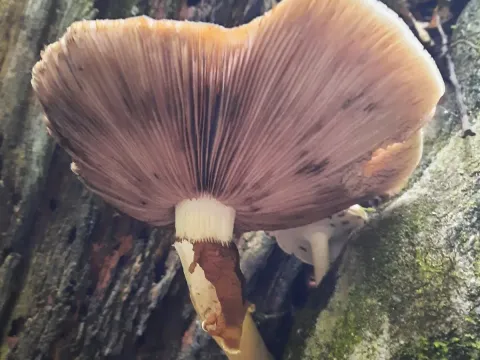
Cyclocybe
Cyclocybe Velen.
Cyclocybe, belonging to the Strophariaceae family, requires meticulous preparation of the growth medium to ensure successful inoculation. The process begins with the sterilization of the substrate, typically composed of hardwood sawdust, straw, or a specialized blend of cellulose-rich agricultural waste.
What the section contains

Cyclocybe
The inoculation phase involves introducing high-quality grain spawn into the cooled, sterile substrate. This must be carried out in a clean-room environment to prevent contamination by aggressive molds or pathogenic bacteria, which compete with the mycelium for nutrients.
Once inoculated, the substrate is packed into specialized filter-patch bags to maintain hygiene while allowing necessary gas exchange. These bags are stored in dark, temperature-controlled incubation chambers where the mycelium gradually colonizes the medium.
Incubation duration typically ranges from two to four weeks, depending on the ambient temperature and the spawn rate used. During this phase, it is crucial to avoid any movement of the blocks to prevent damage to the developing mycelial network.
Consistent environmental monitoring during the sowing and incubation phase is essential. Even minor fluctuations in temperature can slow down colonization, potentially leading to uneven growth when the blocks are moved to the fruiting room.
Fruiting of Cyclocybe requires a transition in environmental conditions, specifically a drop in temperature to 15–18 degrees Celsius. This mimics natural climate shifts, triggering the mycelium to initiate the development of primordia and eventually mature fruit bodies.
Humidity levels must be maintained strictly between 85% and 90%. Automated misting systems are the industry standard, ensuring consistent moisture on the surface of the growing mushrooms without causing waterlogging, which could facilitate bacterial growth.
Lighting is a vital environmental parameter for Cyclocybe. Exposure to ambient or artificial light (cool white spectrum) for about 8–10 hours a day is necessary to guide the direction of fruit body growth and ensure proper morphological development.
Effective ventilation is required to keep carbon dioxide levels low. High CO2 levels lead to undesirable physiological changes, such as elongated, stunted stems and small, underdeveloped caps, which are detrimental to market quality.
Nutritional supplementation, such as the addition of wheat bran or gypsum to the substrate, can significantly enhance yield. However, these additions must be calculated carefully to ensure the pH remains within the optimal range of 6.0 to 7.0 throughout the growth cycle.
The biological efficiency of Cyclocybe is generally high, with modern strains capable of producing 20% to 25% of the substrate's dry weight in fresh mushrooms. Achieving these levels requires rigorous adherence to the cultivation parameters.
Production is typically organized into distinct flushes. Each flush requires a brief resting period after the harvest, allowing the mycelium to recover energy before initiating the next round of fruiting. Three to four flushes are common in commercial setups.
Yield stability is heavily dependent on the quality of the primary culture and the precision of the sterilization process. Using laboratory-certified spawn ensures that the genetic potential of the crop is fully realized in each production cycle.
After the final flush, the substrate blocks, now depleted of nutrients, can be repurposed as high-quality compost for landscaping or soil conditioning. This circular approach helps in optimizing the overall sustainability of the mushroom farm.
Total cycle time, from initial inoculation to the final harvest, usually spans about 60 to 70 days. Commercial growers track yields per batch closely to identify the most productive strains and optimize input costs accordingly.
The primary threat to Cyclocybe cultivation is contamination by Trichoderma species (green mold). Once an infection takes hold, it can rapidly colonize a block, outcompeting the target fungi and rendering the product unsafe for consumption.
Bacterial blotch is another significant issue, characterized by dark, sunken spots on the mushroom caps. It is often caused by poor ventilation combined with excessive moisture on the fruit bodies, leading to rapid degradation of the surface tissue.
Pest infestations, particularly by sciarid flies and mites, can cause severe damage by consuming the mycelium and burrowing into the stems of developing mushrooms. Strict sanitation and physical barriers like fine-mesh screens are essential preventative measures.
Proper record-keeping and regular inspections allow for early detection of potential threats. When contamination is found, the affected blocks should be removed immediately to prevent the spread of spores to the remaining healthy production area.
- Trichoderma (green mold)
- Bacterial blotch
- Sciarid flies (fungus gnats)
- Mites
Harvesting should be timed precisely before the mushroom caps fully flatten and before the gills release significant amounts of spores. Collecting them at this stage ensures maximum freshness and optimal shelf life.
Mushrooms are harvested by twisting the base of the stem and gently lifting them from the substrate. It is crucial to remove the entire base to prevent decaying tissue from encouraging the growth of unwanted bacteria or molds.
Post-harvest handling is critical for maintaining quality. The produce should be moved quickly to a refrigerated environment at 2–4 degrees Celsius to slow down respiration and prevent the mushrooms from becoming soft or discolored.
Sorting and grading should occur immediately following harvest to ensure that only prime specimens reach the consumer. Any mushrooms with bruising, blemishes, or signs of disease should be discarded from the market batch.
Packaging in breathable containers, such as perforated plastic or cardboard trays, is standard practice. This protects the product from mechanical damage while preventing moisture accumulation that could accelerate spoilage during distribution.