
Cullen tenax
Cullen tenax
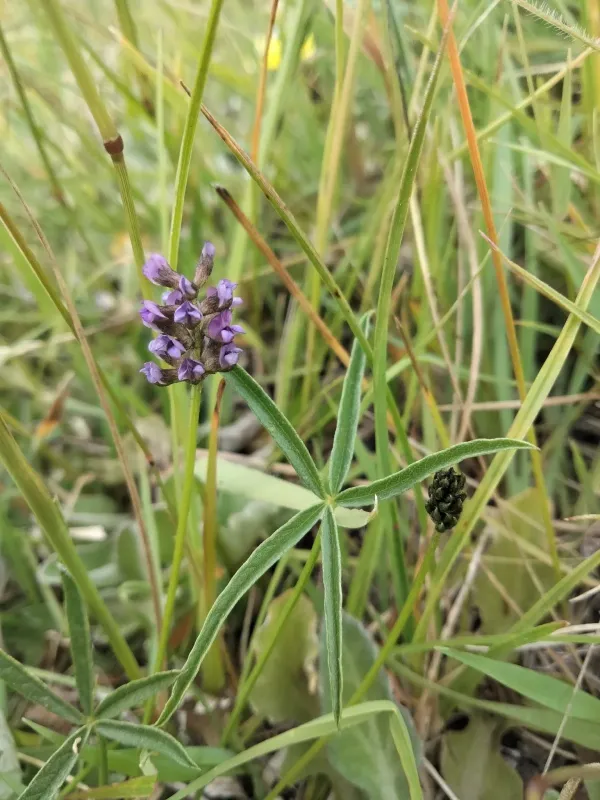
Description
Sowing dates
Cullen tenax is a perennial herbaceous plant from the Fabaceae family, recognized for its resilience and potential as a forage crop in dry environments.
The seeds of this species feature a hard coat, necessitating scarification techniques to ensure uniform germination and successful crop establishment in the field.
Sowing should be timed with the onset of favorable moisture conditions, typically at the beginning of the rainy season, to allow the roots to anchor deeply.
Precise planting depth, usually limited to one or two centimeters, is essential to prevent seed exhaustion before reaching the soil surface.
Optimizing row spacing allows for better resource distribution and supports the development of the plant's characteristic taproot system.
Growing requirements
This species thrives in well-drained soil types, showing significant tolerance to both sandy and loamy conditions, including those with elevated salinity levels.
Cullen tenax requires full sun exposure to achieve maximum photosynthetic efficiency and heat tolerance, which are critical traits for its survival in arid climates.
Although highly drought-tolerant, the crop benefits from adequate soil moisture during the initial establishment phase to support deep root development.
Successful cultivation depends on the presence of compatible nitrogen-fixing bacteria in the soil, which are vital for the plant's nutrient uptake and overall biomass production.
The plant adapts well to temperate and subtropical climates, where temperature fluctuations occur, provided the soil drainage remains optimal.
Yield
The primary use of Cullen tenax in agriculture is as a high-quality forage source for livestock, providing essential protein content in arid pasture lands.
Its ability to regenerate quickly after grazing or cutting makes it a valuable component for sustainable pasture management and seasonal fodder supply.
When managed properly, the biomass yield remains consistent, even during periods of low rainfall that might inhibit the growth of traditional forage species.
The nutritional value of the foliage peaks during the flowering stage, making this the optimal time for harvesting if the goal is to produce stored feed.
Beyond forage, its root system contributes to soil structure improvement and erosion control, adding secondary value to its role in land management.
Main diseases and pests
Root rot pathogens represent the most significant threat to the crop, particularly when cultivation occurs in soils prone to waterlogging or compaction.
Insect pests, including various legume-specialized weevils, may cause damage to foliage, which requires routine scouting to monitor pest population levels.
Competition from fast-growing invasive weeds during the seedling stage can significantly suppress the establishment and density of Cullen tenax stands.
Effective management includes maintaining crop rotation schedules and avoiding the use of heavy machinery that causes excessive soil compaction.
Applying integrated pest management strategies ensures that the crop remains productive while minimizing the need for extensive chemical interventions.