
Cullen patens
Cullen patens
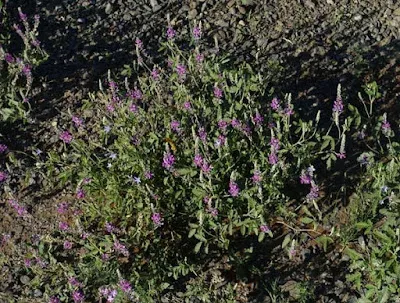
Description
Sowing dates
Cullen patens is a perennial herbaceous plant belonging to the Fabaceae family. It is native to the arid and semi-arid regions of Australia, where it has evolved to thrive in harsh environments characterized by irregular rainfall and high thermal fluctuations.
The sowing season is determined by the local climate, but generally, planting should coincide with the onset of consistent favorable temperatures to ensure uniform germination and seedling establishment.
The seeds of this species feature a hard seed coat, making scarification a necessary practice to break dormancy and improve the overall germination rate under field conditions.
Seeds should be sown at a shallow depth of approximately 1-2 cm. This ensures that the seedling has enough energy to emerge while maintaining proper contact with the moisture available in the upper soil profile.
Inoculation with specific nitrogen-fixing bacteria is recommended during the sowing process. This symbiosis is critical for the plant's health, early growth vigor, and long-term sustainability in the soil.
Growing requirements
Cullen patens is highly prized for its exceptional drought tolerance. It possesses a deep taproot system, which allows it to access water deep within the soil profile, making it suitable for water-limited environments.
The plant performs best in well-drained sandy or loamy soils with a neutral to slightly alkaline pH. It is highly susceptible to root damage if exposed to waterlogged conditions or poor drainage.
Optimal growth occurs at temperatures ranging between 20°C and 30°C. It is a sun-loving plant that requires full exposure to thrive and maximize its photosynthetic efficiency throughout the growing season.
It does not compete well with aggressive weeds or taller vegetation. Therefore, maintaining a clean seedbed and appropriate row spacing is essential for initial crop development.
Application of phosphorus-based fertilizers can significantly enhance root development and plant health, especially in soil types where nutrient availability is naturally low or restricted.
Main diseases and pests
The crop can be affected by various leaf-chewing insects and caterpillars, which may cause significant damage to the foliage during periods of rapid leaf expansion if left unmonitored.
Fungal diseases, such as root rot or leaf spots, are typically associated with excessive soil moisture or poor ventilation in dense stands. Proper management of irrigation is crucial to mitigate these risks.
Soil-borne pests like nematodes can cause stress to the root system, reducing the plant's capacity to fix nitrogen and absorb nutrients, which calls for strategic crop rotation practices.
Integrated pest management (IPM) is the preferred approach, emphasizing early detection through field scouting and the use of selective biological controls to maintain the ecological balance.
Preventative measures, such as avoiding over-irrigation and ensuring optimal plant density, are more effective than curative chemical interventions for maintaining a healthy and productive stand.
Harvesting
The primary agricultural use of Cullen patens is as a high-protein forage crop for livestock, as well as a cover crop for restoring degraded landscapes and improving soil nitrogen levels.
For high-quality hay production, harvesting should be performed during the peak flowering stage, which ensures an ideal balance between total biomass yield and nutritional protein concentration.
When utilized for grazing, it is essential to implement rotational grazing systems. This allows the plants sufficient time to recover their energy reserves after being grazed down by livestock.
Seed harvest should be timed carefully when the seed pods have reached full maturity but before significant shattering occurs, ensuring that the seeds are collected at their peak viability.
Proper harvest management not only provides high-quality nutritional value for animals but also supports the long-term survival and persistence of the stand through natural regeneration cycles.