
Cullen australasicum
Cullen australasicum
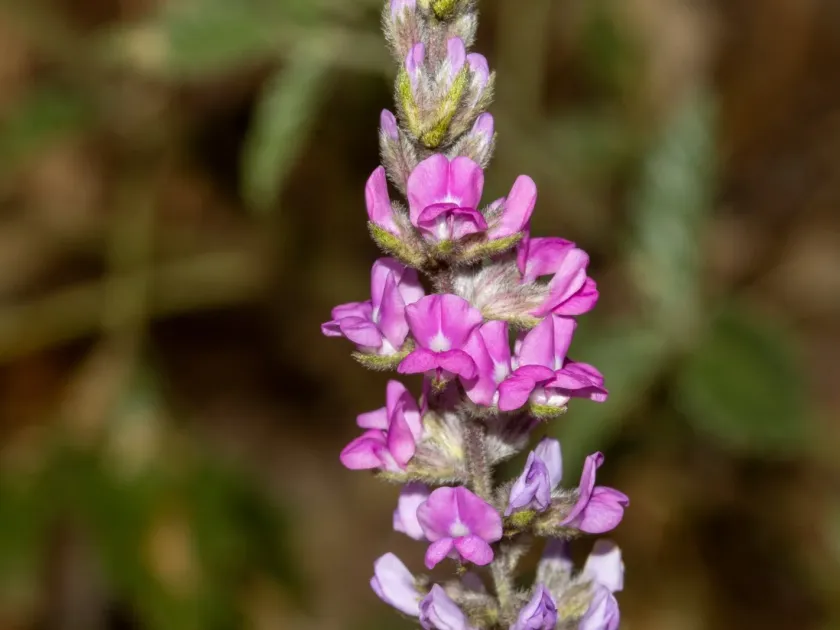
Description
Sowing dates
Cullen australasicum is a hardy perennial herb belonging to the Fabaceae family, native to the arid and semi-arid regions of Australia. This species is well-regarded for its adaptability to harsh environments.
Due to its hard seed coat, successful propagation requires mechanical or chemical scarification to improve germination rates. Without this pre-sowing treatment, seeds may remain dormant in the soil for extended periods.
Sowing should take place when soil temperatures are consistently above 20 degrees Celsius. Optimal planting depth is shallow, usually around 1–2 centimeters, ensuring sufficient seed-to-soil contact for moisture absorption.
Row spacing should be managed to prevent excessive competition while allowing for efficient mechanical weed control during the establishment phase. Proper spacing is essential for maximizing yield in the first growing season.
Inoculation with specific nitrogen-fixing bacteria is highly recommended to ensure the plant can effectively harness atmospheric nitrogen, thereby reducing the need for synthetic fertilizers.
Growing requirements
The plant thrives in well-drained, sandy, or light loam soils. It is highly intolerant of waterlogging, which rapidly leads to root system failure and the development of fatal fungal infections.
Cullen australasicum is a heliophyte, meaning it requires full sun exposure throughout the day to achieve optimal biomass production and metabolic activity.
The species demonstrates excellent drought tolerance, allowing it to maintain growth during periods of limited rainfall that would negatively impact many other conventional forage crops.
While tolerant of slightly alkaline soils, the plant prefers a near-neutral soil pH. Adequate aeration is the most critical soil requirement for its long-term health and persistence in the field.
- Full sun exposure;
- Well-drained soil structure;
- Neutral to slightly alkaline pH;
- Low soil moisture sensitivity;
- Protection from excessive humidity.
Yield
The primary agricultural utility of Cullen australasicum is as high-quality forage for livestock. Its foliage is rich in proteins and essential minerals, making it a valuable feed component.
Yield potential is largely determined by environmental moisture levels and the success of the establishment phase. Under ideal conditions, it can provide multiple cuts throughout the growing season.
This species is highly valued for its role in pasture improvement programs. Its ability to persist in harsh environments makes it a reliable source of green matter when other grasses wither.
Data suggests that integrating this legume into permanent pastures can significantly increase the total productivity of the land, especially in drought-prone areas.
Sustainable management practices, including rotational grazing, allow the plant to regenerate effectively, maintaining stable yield levels over many years of utilization.
Main diseases and pests
Fungal root pathogens represent the most significant threat, especially if the crop is planted on compacted or poorly drained soil, which prevents adequate oxygen circulation to the roots.
Insect pests, including leaf-eating beetles and weevils, can cause significant damage to the canopy. Regular monitoring of the field is necessary to trigger timely intervention when needed.
Root-knot nematodes can also pose a problem in sandy soil conditions, causing stunted growth and reducing the plant's overall competitive vigor against weeds.
Overgrazing is a major threat to the plant's persistence. Excessive removal of foliage prevents the plant from replenishing energy reserves in the root system, ultimately leading to dieback.
Integrated Pest Management (IPM) strategies, which prioritize crop rotation and the selection of site-specific resilient varieties, are the most effective ways to mitigate these threats.
Harvesting
Harvesting for forage should occur during the early flowering stage to ensure the highest nutritional density. Post-flowering, the stems become woody, significantly reducing their feed value.
When mechanical harvesting, a cutting height of at least 10 centimeters must be maintained to protect the basal buds, which are essential for regrowth after the harvest.
Hay production requires efficient drying to prevent spoilage. Given the typical climate of its growth range, rapid sun-curing is usually sufficient to maintain the forage's quality.
Seed harvesting should be performed when the pods are dark, dry, and brittle. Mechanical harvesting requires precision to minimize shattering losses in the field during the process.
After collection, seed lots should be thoroughly cleaned and stored in dry, cool conditions to maintain viability and prevent post-harvest fungal contamination.