
Cryptantha muricata
Cryptantha muricata
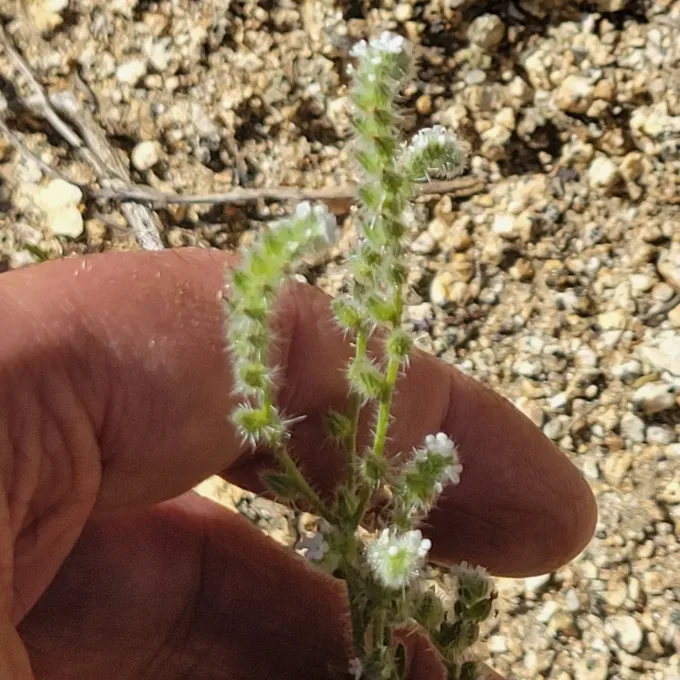
Description
Sowing dates
The seeds of Cryptantha muricata typically germinate in their native environment in early spring when temperatures stabilize. In controlled agricultural or research settings, autumn sowing is preferred to provide the necessary cold stratification period for the seeds to break dormancy.
Seeds should be sown at a very shallow depth, as the small size of the seeds requires adequate light exposure to trigger successful germination and early sprout development. Timing must align with the onset of the wet season in the plant’s respective climate zone.
The planting medium must be loose and exhibit high drainage capacity to mimic the sandy or rocky soils found in the plant's natural range. Proper spacing is critical to ensure that seedlings do not compete for light and nutrients during their vulnerable early growth phase.
Using specialized horticultural substrates enriched with horticultural sand or fine gravel improves germination success rates. When managing nursery-grown plants, the seeds are distributed over the soil surface and lightly covered with a thin layer of inert grit.
Close monitoring of seedlings is essential during the first few weeks, as young Cryptantha muricata plants are highly susceptible to damping-off if the growing medium is kept overly saturated or lacks proper air circulation.
Growing requirements
As a member of the Boraginaceae family, Cryptantha muricata is well-adapted to arid and semi-arid ecological zones. The plant requires significant exposure to direct sunlight to maintain a healthy growth cycle and produce high-quality reproductive structures.
The species has strict soil requirements: excellent drainage is mandatory to prevent root rot, a common issue in heavier soil types. Sandy, gravelly, or loam-based soils with minimal organic matter are ideal for its successful establishment.
While the plant thrives in moderate temperatures, it exhibits high tolerance for prolonged drought, a characteristic attributed to its specialized metabolic pathways and physiological adaptations in leaf and stem structure.
Soil pH levels should remain neutral to slightly alkaline, reflecting the mineral composition of the Western North American landscapes where it is naturally found. Excessive use of nitrogenous fertilizers should be avoided as it compromises the plant's natural resilience.
In its native habitat, Cryptantha muricata is found within desert and shrub-steppe communities, which dictates its minimal requirement for supplemental irrigation once the root system has been sufficiently established.
Yield
The economic value of this species is currently limited as it is primarily a wild-growing plant; therefore, quantitative yield data regarding biomass or seed production for industrial scale is not commercially standardized.
In research applications, productivity is assessed by measuring population density per unit area in wild habitats. The plant produces characteristic scorpioid cymes, which facilitate progressive seed maturation over the flowering season.
Collecting seed material in natural settings poses challenges due to the dehiscence patterns of the fruit, as seeds tend to disperse rapidly once they reach optimal maturity.
Scaling up seed production is only viable under controlled greenhouse conditions with meticulous manual harvesting, which currently renders large-scale agricultural production of this species economically inefficient.
Ongoing efforts focused on ecological restoration prioritize the selection of high-performing wild genotypes to ensure the stability of future populations and to improve overall fruit yield in conservation plots.
Main diseases and pests
The primary threats to Cryptantha muricata include various fungal pathogens that thrive in conditions of high humidity and poor ventilation. Over-saturation frequently causes collar rot and the development of powdery mildew.
Common pests include native insects that feed on the foliage of Boraginaceae species, specifically coleopteran larvae and certain lepidopteran species that can cause localized defoliation if left unchecked.
Competition from invasive plant species is a significant threat during the seedling stage, as Cryptantha muricata exhibits a relatively slow initial growth rate compared to aggressive weed varieties.
During periods of excessive rainfall, the plants become highly vulnerable to secondary bacterial infections that target the pubescent surfaces of leaves and stems, leading to tissue necrosis and plant decline.
Chemical control measures are rarely recommended, given the plant’s high sensitivity to pesticides and its critical role in supporting native insect pollinators and beneficial arthropods.