
Cryptantha aperta
Cryptantha aperta
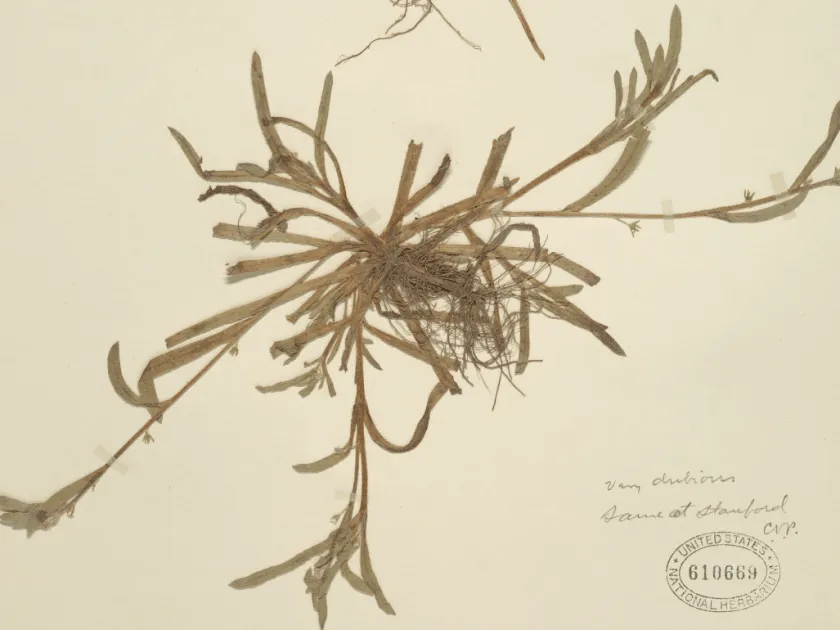
Description
Growing requirements
Cryptantha aperta is a specialized herbaceous plant belonging to the Boraginaceae family. While not a conventional agricultural crop, it is a plant of significant interest in botanical studies regarding desert adaptation and rare species preservation.
The plant originates from the arid regions of North America, specifically localized within the state of Utah. It is highly specialized for growth in specific geological environments, often associated with gypsum-rich or limestone-derived substrates typical of desert landscapes.
Botanically, this species is defined by its annual growth cycle and a taproot system designed to extract deep-seated moisture. The entire plant is covered in stiff, coarse hairs, which serve as an essential adaptation to survive high solar radiation and extreme heat.
The environmental requirements for Cryptantha aperta include excellent drainage and full sun exposure. It is highly susceptible to root decay and fungal infections when cultivated in environments with humidity levels that deviate significantly from its native desert habitat.
Agronomic management is minimal and focuses on mimicking natural desert conditions. Successful growth requires soil with low organic matter content, as the species is adapted to nutrient-poor, mineral-heavy soils found in its original ecological niche.
Main diseases and pests
The primary threats to Cryptantha aperta include habitat fragmentation and degradation caused by land development. As an endemic species with a restricted distribution, any disturbance to its specific geological habitat can lead to local extinction.
Insect pests, particularly specialized desert herbivores, can impact the plant's reproductive success by feeding on developing seeds and flowers. This reduces the ability of the population to replenish itself during periods of extreme environmental stress.
Root pathogens and rot-inducing fungi are significant threats if the plant is grown outside of its arid environment. High humidity and waterlogged soil are the primary drivers of these pathogenic outbreaks, which can destroy root systems rapidly.
Invasive weed species compete with Cryptantha aperta for limited soil moisture and space. The aggressive nature of invasive grasses and shrubs often leads to the displacement of smaller endemic herbs, further reducing the viability of established populations.
Conservation strategies are focused on habitat protection rather than commercial cultivation. Research is ongoing to understand the physiological limitations of the species to ensure its long-term survival in an ever-changing climate.