
Cryptantha bakeri
Cryptantha bakeri
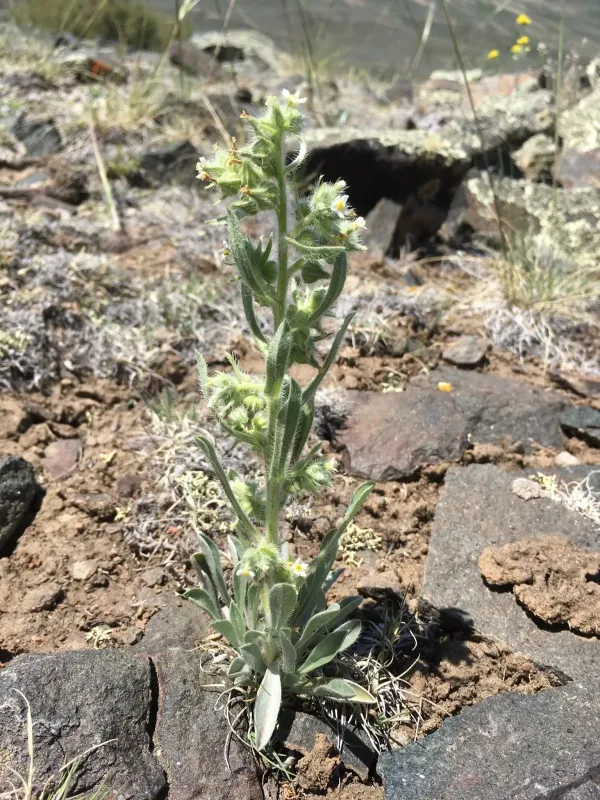
Description
Growing requirements
Cryptantha bakeri is a distinctive herbaceous plant belonging to the Boraginaceae family. It is naturally adapted to specific arid and semi-arid environments, exhibiting significant morphological specializations to thrive in conditions with limited available water resources.
The agronomic success of this culture heavily depends on the soil composition. It requires extremely well-drained, sandy, or stony soils. Any accumulation of moisture in the root zone must be strictly avoided to prevent the development of root rot and physiological stress.
High levels of solar radiation are essential for the healthy growth of Cryptantha bakeri. As a typical xerophyte, the plant utilizes intense light to optimize its metabolic processes, making open and unobstructed cultivation sites ideal for its development.
Climate requirements include a preference for dry atmospheric conditions and warm temperatures. The plant demonstrates high resilience to extreme diurnal temperature fluctuations, which are characteristic of its native habitat, allowing it to survive cool nights following hot days.
In terms of agricultural practice, Cryptantha bakeri is not a traditional high-input crop. It thrives in nutrient-poor soils and requires very little fertilization. Over-fertilization, especially with nitrogen, can negatively impact the plant's structural integrity and resistance to environmental stress.
Main diseases and pests
Fungal pathogens represent the primary threat to Cryptantha bakeri, particularly when humidity levels rise above the plant's tolerance threshold. These pathogens can rapidly decimate a crop by compromising the root system and the lower stem structure.
Pests such as root-feeding larvae can cause significant damage in early developmental stages. Integrated pest management should prioritize observation and cultural controls over intensive pesticide applications to maintain the plant's delicate health.
Weed competition is a critical challenge during the establishment phase. The plant lacks the rapid growth habit necessary to compete with aggressive weeds, necessitating manual and careful weeding practices to protect the crop's development.
Improper watering practices are a major "threat" to the cultivation of this species. Even brief periods of waterlogging can be fatal to the crop, making the implementation of a precise, controlled irrigation system vital for commercial or research-based success.
Seasonal weather instability, particularly unexpected heavy rainfall during the growing season, can lead to soil compaction and reduced aeration. Such conditions hinder root development and weaken the plant's ability to withstand common pathogens.