
Hoffmann's cryptantha
Cryptantha hoffmannii
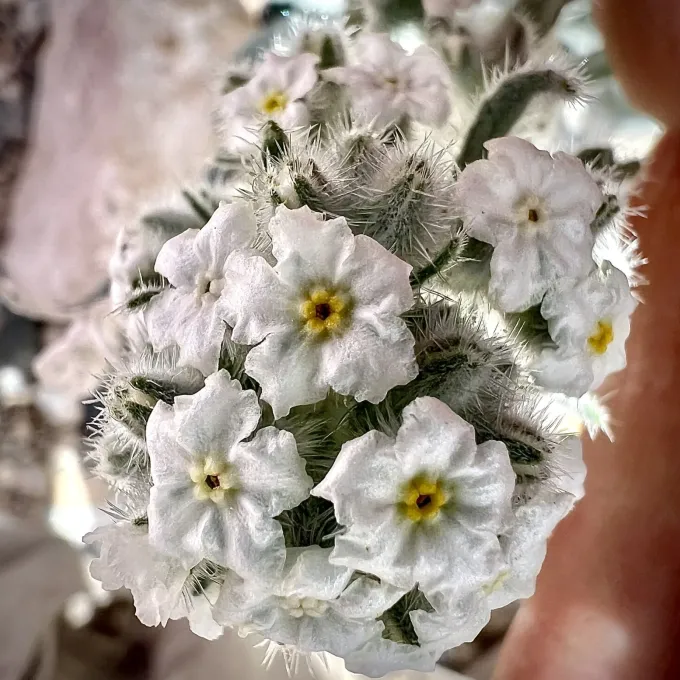
Description
Sowing dates
Hoffmann's cryptantha (Cryptantha hoffmannii) belongs to the Boraginaceae family. In the wild, this species is considered rare, often endemic, and requires specific conditions for successful seed germination.
Sowing in controlled environments must account for the plant's biological cycle, which is adapted to arid conditions. Cold stratification of seeds is often recommended to overcome dormancy and increase germination rates.
For optimal results, use highly aerated substrates, mimicking natural sandy or rocky soil compositions. Maintaining a steady temperature range of 15–20 degrees Celsius is crucial during the early stages of development.
The optimal sowing time in protected conditions is early spring to ensure the seedlings receive adequate light. Seeds should only be lightly covered with fine gravel, as they often require direct light exposure to trigger germination.
Post-sowing irrigation must be strictly moderated to avoid waterlogging, which is lethal to the seedlings. Regular monitoring for fungal infections is necessary, as the early stages of growth are highly vulnerable.
Growing requirements
The crop has high soil quality requirements, preferring well-drained, calcareous, or sandy substrates. Low organic matter content is essential, reflecting the plant's adaptation to harsh, impoverished mountain desert environments.
Climate preferences include high solar radiation and low relative air humidity. The plant is extremely sensitive to overwatering and standing water near the root collar, which promotes root rot.
Temperature regimes should mimic arid conditions, including significant diurnal temperature variations. While the plant can tolerate temporary cooling, it is highly sensitive to prolonged periods of high humidity combined with low temperatures.
Agrotechnical requirements focus on maintaining a neutral to slightly alkaline soil pH. Avoid the use of concentrated mineral fertilizers, as the plant is adapted to nutrient-poor soils and reacts negatively to nitrogen excess.
Optimal placement requires open, well-ventilated areas with no shading from other plants. In greenhouse conditions, forced ventilation is mandatory to prevent overheating and the accumulation of excess humidity.
Main diseases and pests
Primary threats include fungal root diseases caused by pathogens like Pythium and Phytophthora, which thrive in poorly drained substrates.
Pests such as spider mites may infest the foliage under conditions of low humidity and stagnant air circulation within indoor environments.
Root-knot nematodes pose a hidden risk, especially if the growing medium is not sterilized prior to planting, leading to stunted growth and deformed shoots.
Slugs and snails can cause significant mechanical damage to young leaves during spring, compromising the plant's immunity and creating entry points for opportunistic bacterial infections.
- Powdery mildew infections in high humidity.
- Damage from sucking insects like aphids and thrips.
- Risk of bacterial wilt due to nitrogen fertilization.