
Cryptantha hispidula
Cryptantha hispidula
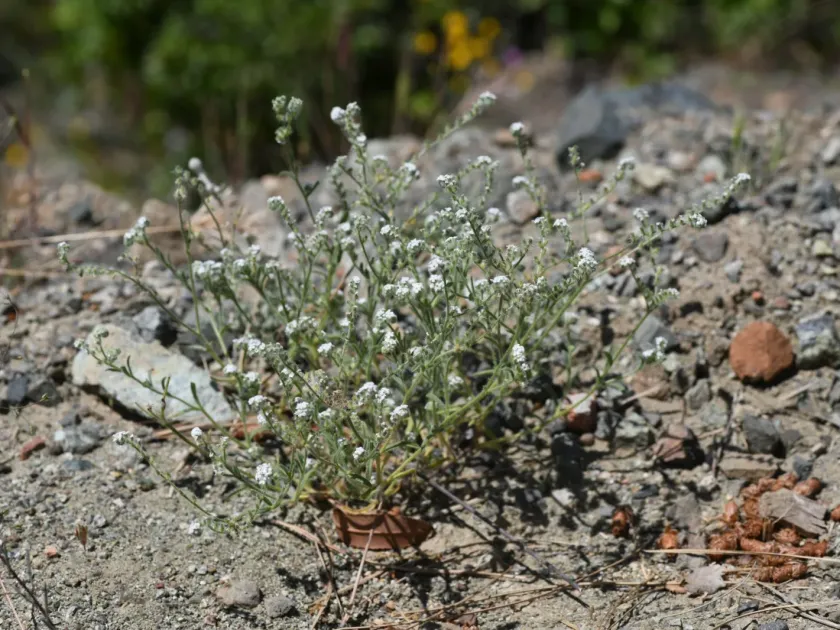
Description
Growing requirements
Cryptantha hispidula is a plant species belonging to the Boraginaceae family. It is recognized for its distinctive hairy foliage and its adaptation to the harsh, arid environments of Western North America, where it thrives in open, sun-drenched habitats.
In terms of environmental requirements, this species demands excellent drainage and high light exposure. It is perfectly suited for regions with low annual rainfall and significant daily temperature fluctuations, reflecting its native semi-arid provenance.
Soil quality should lean toward sandy or gravelly textures. The plant does not require high levels of organic matter; in fact, overly rich soils can be detrimental, leading to poor structural development and reduced longevity of the plant during the growing season.
Water management is the most critical aspect of its cultivation. Irrigation must be strictly limited to prevent waterlogging, which often leads to rapid decay of the taproot system. It prefers drying out completely between water cycles.
As a field crop, it is relatively low-maintenance, requiring minimal human intervention once established. The primary agronomic goal is to mimic the natural ecological conditions as closely as possible to ensure vigorous vegetative growth and subsequent seed production.
Main diseases and pests
The main threats to Cryptantha hispidula arise from fungal diseases caused by excess humidity and poor air circulation. Root rot is the most common pathogen-related issue that can quickly devastate a plantation if the soil moisture is not managed correctly.
Aphids are a recurring pest that tends to target the inflorescences of the plant during the flowering stage. Their presence can severely reduce seed yields and overall plant vigor, necessitating early intervention if infestations are detected.
Powdery mildew is another risk factor, especially in environments where humidity spikes. Proper spacing between rows and plants is essential to maintain airflow and minimize the development of these microscopic pathogens on the leaves.
Mollusks such as slugs and snails pose a threat during the early seedling stages. These pests can consume young tissue entirely, which is particularly destructive for early-season plantings that have not yet developed enough mass to withstand grazing.
Soil-borne nematodes can impact the root system, leading to stunted growth. Implementing a strict crop rotation schedule helps reduce the population of these pests in the soil, ensuring a healthier subsequent cycle for the cultivation area.