
Cryptantha fulvocanescens
Cryptantha fulvocanescens
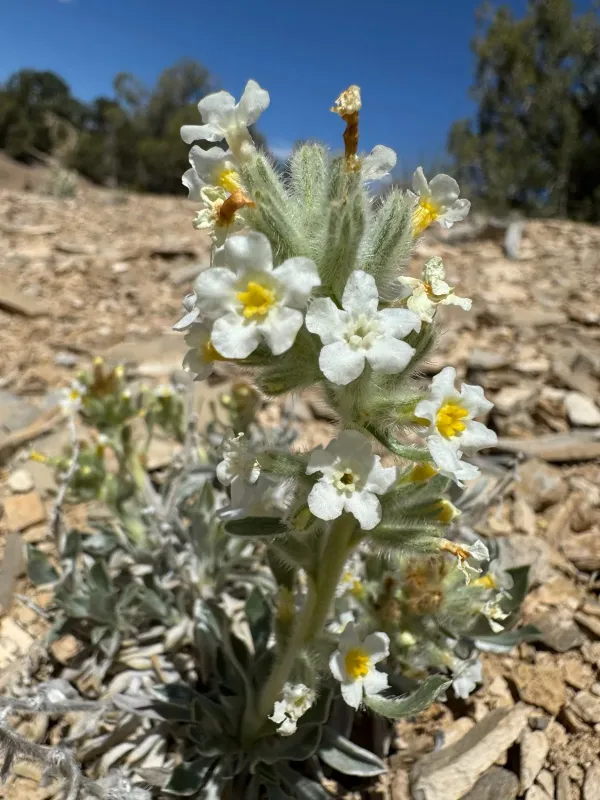
Description
Growing requirements
Cryptantha fulvocanescens is a perennial herbaceous plant belonging to the Boraginaceae family. Known for its distinct appearance, it is highly adapted to arid environments, functioning as a true xerophyte that thrives where many other plant species cannot survive.
The native range of this species is centered in the semi-arid regions of North America, particularly in high-desert environments. It naturally occurs on exposed slopes and rocky terrain, where it benefits from high solar exposure and well-drained substrate conditions.
Regarding soil requirements, this plant strictly demands sandy, gravelly, or rocky soil with excellent aeration. The presence of limestone or volcanic rock substrates is often beneficial for its development, as these soils provide the alkalinity and drainage necessary to prevent root rot.
Climate conditions are the most critical factor in its growth. Cryptantha fulvocanescens requires a significant amount of direct sunlight and low relative humidity throughout its growing season. It is well-acclimated to the wide temperature fluctuations typical of high-desert climates, including cold winters and hot, dry summers.
Botanically, the plant is characterized by its stiff, brownish-gray hairs that provide its specific texture and color. These hairs serve as a vital adaptation, reflecting excessive sunlight and reducing water loss through transpiration, which allows the plant to maintain its moisture balance during heat waves.
Main diseases and pests
The primary threat to the health of Cryptantha fulvocanescens is excessive moisture. In cultivation, even slight waterlogging of the root zone can prove fatal, rapidly initiating the development of opportunistic fungal pathogens that compromise the plant's structure.
In terms of pests, the plant is occasionally attacked by aphids during the early spring bloom, which can distort the development of the inflorescences. While rare, infestations by specialized beetles can also cause localized damage to the foliage, weakening the overall plant.
Fungal diseases such as powdery mildew may appear if the environmental humidity rises beyond the species' tolerance threshold. Prevention relies almost exclusively on choosing an appropriate planting site that guarantees rapid drainage and continuous airflow.
Competition from aggressive, non-native weeds is a significant threat in its natural habitat and during establishment. Because the plant has a relatively slow growth rate, it requires a clean, weed-free area to establish its root system properly without being overshadowed by larger species.
Effective management involves minimal intervention. Once established, the plant is quite resilient, but gardeners must remain vigilant regarding the drainage quality of the soil and the proximity of other plants that might restrict air circulation and light penetration.