
Cryptantha flavoculata
Cryptantha flavoculata
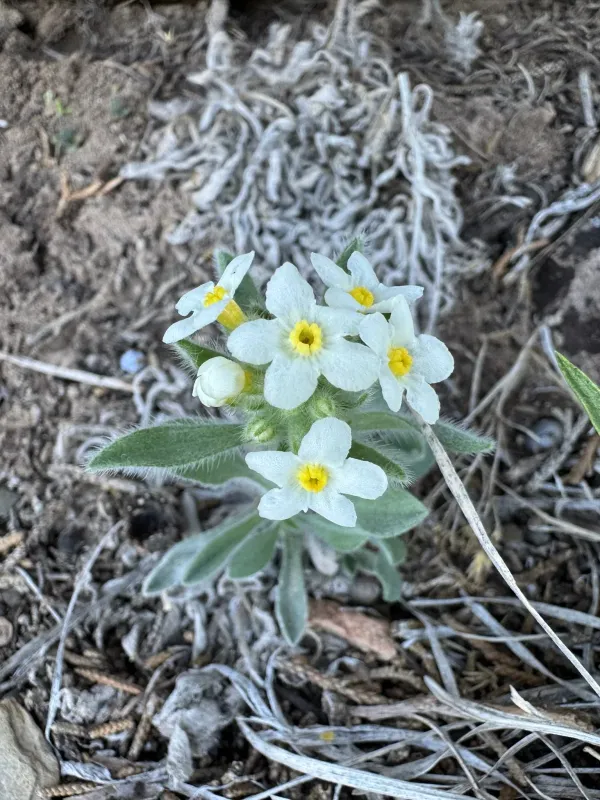
Description
Growing requirements
Cryptantha flavoculata, commonly known as yellow-eye cryptantha, is a herbaceous perennial belonging to the Boraginaceae family. This species is native to arid, rocky slopes and sagebrush communities of the western United States, reflecting its high drought tolerance.
The plant thrives in well-draining, gravelly, or sandy soils. Agronomic success with this species depends heavily on preventing water stagnation, as the plant is highly susceptible to root rot when moisture levels remain persistently high around the root collar.
Exposure to full sun is a non-negotiable requirement for this culture. It requires high solar radiation to maintain its compact growth form and to stimulate the development of its distinctive white flowers with prominent yellow centers.
Botanically, it features a basal rosette of narrow, bristly-haired leaves. This pubescence acts as a thermal buffer and reduces transpiration, allowing the plant to survive in extreme mountain desert climates where water availability is minimal.
In terms of economic and practical use, Cryptantha flavoculata is primarily valued in xeriscaping and alpine gardening. It serves as an excellent candidate for low-maintenance landscaping where water conservation and soil stability are priority concerns.
Main diseases and pests
The primary threats to Cryptantha flavoculata in a cultivated environment are pathogens resulting from poor soil aeration and excessive irrigation. Root and crown rots are the most frequent causes of plant loss in managed garden settings.
Fungal issues such as powdery mildew can occur if the local humidity becomes too high or if airflow around the rosettes is restricted. Strategic planting design that maximizes exposure to wind and sun is essential for disease prevention.
Common horticultural pests like aphids and spider mites can infest the plant, especially when it is under drought or heat stress. These pests can cause significant damage to the foliage and affect the vigor of the flowering stalks during the growing season.
Seed-feeding insects represent a potential risk if the plant is being propagated for seed production. Monitoring the inflorescences during the late stage of flowering is necessary to ensure that reproductive capacity is not compromised by infestation.
Weed competition is a significant challenge during the plant's establishment phase. Because Cryptantha flavoculata is relatively slow-growing, it cannot effectively compete with faster-growing invasive weeds, requiring careful and consistent manual weeding.