
Yellow cryptantha
Cryptantha flava
Description
Growing requirements
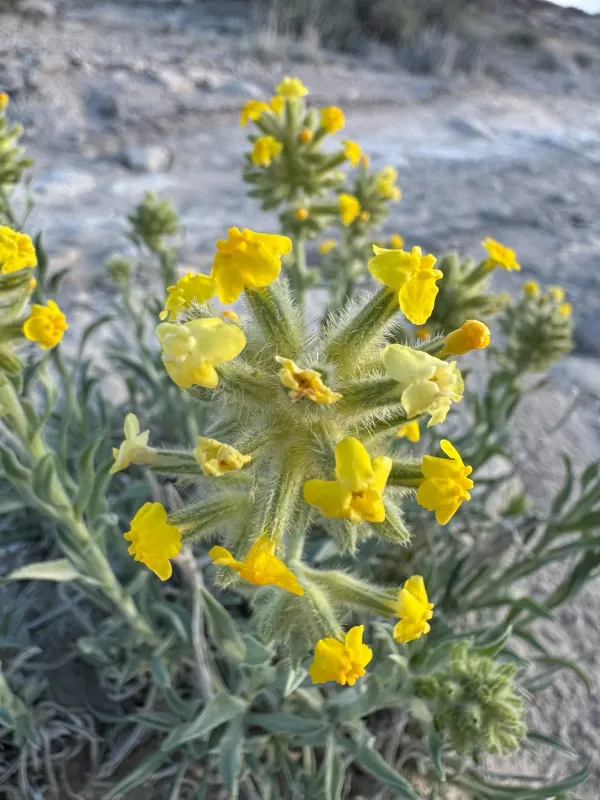
Yellow cryptantha (Cryptantha flava) is a perennial herbaceous plant belonging to the Boraginaceae family. It is native to the arid environments of the Western United States, where it thrives in rocky, sandy, and well-drained soils found in dry canyons and slopes.
The plant is distinguished by its narrow, bristly-hairy leaves, which are a morphological adaptation to limit water loss through transpiration. Its root system is deep and expansive, allowing it to tap into moisture reserves hidden well below the parched surface.
This species is highly demanding regarding light exposure and soil aeration. It requires full sunlight to initiate its characteristic flowering, which presents showy, bright yellow blooms that attract native bees and butterflies.
In terms of agricultural and horticultural use, Cryptantha flava is primarily utilized in low-maintenance landscape design known as xeriscaping. It serves as an excellent ground cover for rocky slopes that are unsuitable for traditional crops.
Proper cultivation involves providing a substrate that mimics the plant's native habitat. Soil amendment with sand or grit is necessary to ensure rapid water runoff, as the species has evolved to avoid moisture saturation at all costs.
Main diseases and pests
The most significant threat to the health of yellow cryptantha is the incidence of fungal pathogens, particularly root rot, which occurs when the plant is kept in overly damp soil conditions.
Insects, such as aphids, can occasionally infest the flower spikes during the late spring, causing potential damage to the reproductive structures of the plant.
The encroachment of invasive non-native plant species remains a critical threat to wild populations, as they compete for space and sunlight in fragile desert ecosystems.
Improper fertilization can weaken the natural resilience of the species, making it more susceptible to opportunistic diseases that thrive in garden settings.
To maintain plant vitality, growers should ensure consistent weeding in the immediate vicinity and strictly avoid over-irrigation during the cooler months of the year.