
Cryptantha flaccida
Cryptantha flaccida
Description
Growing requirements
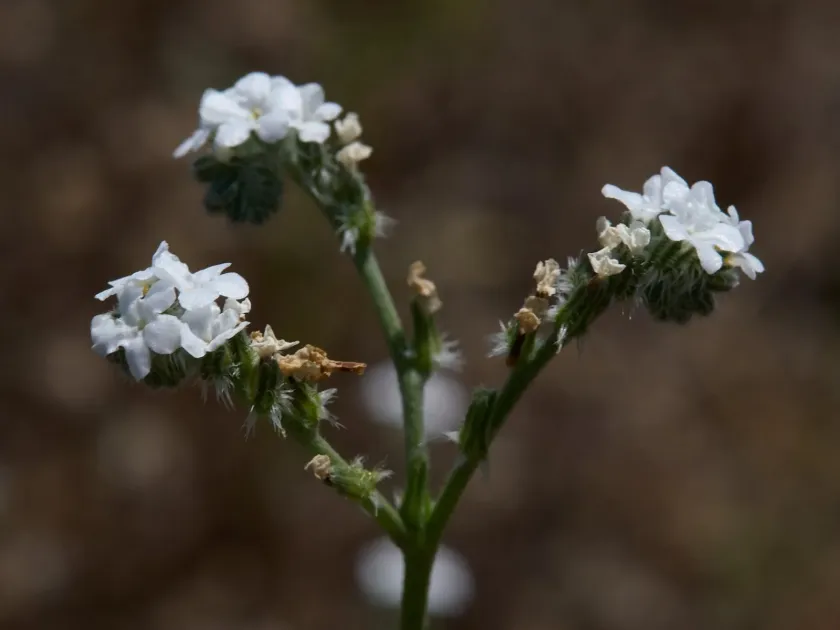
Cryptantha flaccida, commonly known as the weak-stem cryptantha, is an annual plant member of the Boraginaceae family. The plant is botanically recognized by its narrow, densely haired leaves and delicate stem structure, which reflects its adaptation to specific ecological niches in its native range.
The species originates from the western regions of North America, typically found in dry, open habitats such as sandy plains and arid foothills. Its distribution is closely linked to its ability to survive in environments where water availability is periodic and soil nutrient profiles are generally low.
Cultivation requirements necessitate well-drained, sandy-loam soils that prevent root saturation. Given its natural adaptation, the plant requires maximum solar exposure to thrive, as it lacks the physiological mechanisms to compete under dense canopy cover or in shaded agricultural conditions.
Agrotechnical management should focus on soil aeration and minimal mechanical disturbance of the topsoil, which protects the shallow root system. Farmers should avoid over-fertilization with nitrogen, which may lead to excessive vegetative growth at the expense of structural integrity and flowering.
Economically, while Cryptantha flaccida is not a conventional commercial staple, it holds potential for restoration ecology and dryland landscaping. Understanding its growth cycle is essential for managing native vegetation in rangelands and conserving regional biodiversity in arid agricultural zones.
Main diseases and pests
The primary threats to Cryptantha flaccida include fungal pathogens such as mildew and root rot, which are exacerbated by high humidity levels or poor drainage during the growing season. Implementing integrated pest management strategies is crucial for maintaining plant health in localized production settings.
Pest threats primarily involve common insects such as spider mites and leaf-eating beetles, which target the foliage during hot, dry spells. Effective pest control measures involve early monitoring and the application of low-impact insecticides to minimize chemical stress on the plant population.